

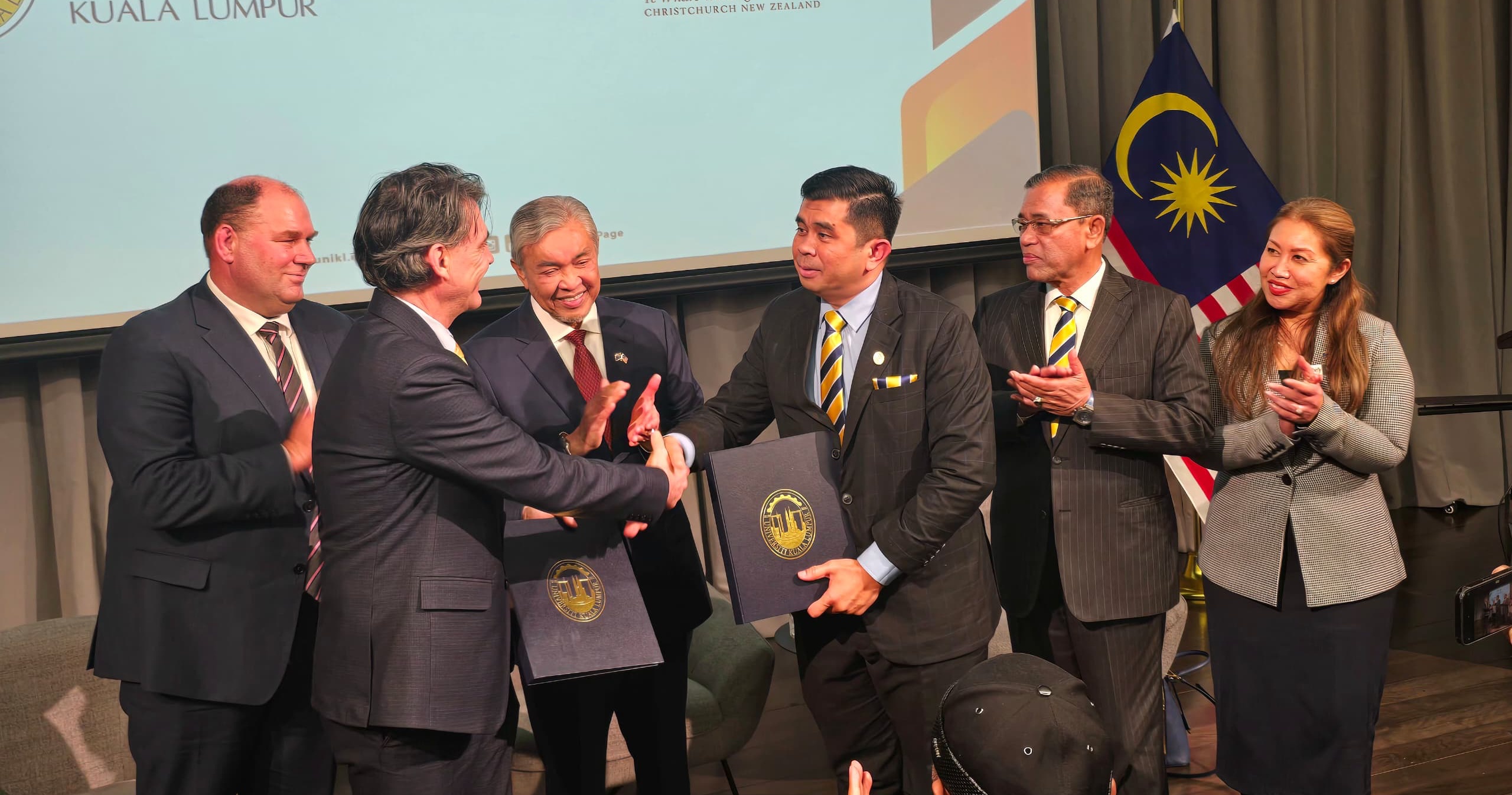
Universiti Kuala Lumpur (UniKL) and the University of Canterbury (UC), New Zealand, have formalised an academic partnership through the exchange of a Letter of Intent (LOI), focusing on advancing collaboration in chemical and process engineering, halal food technology, and sustainable development.
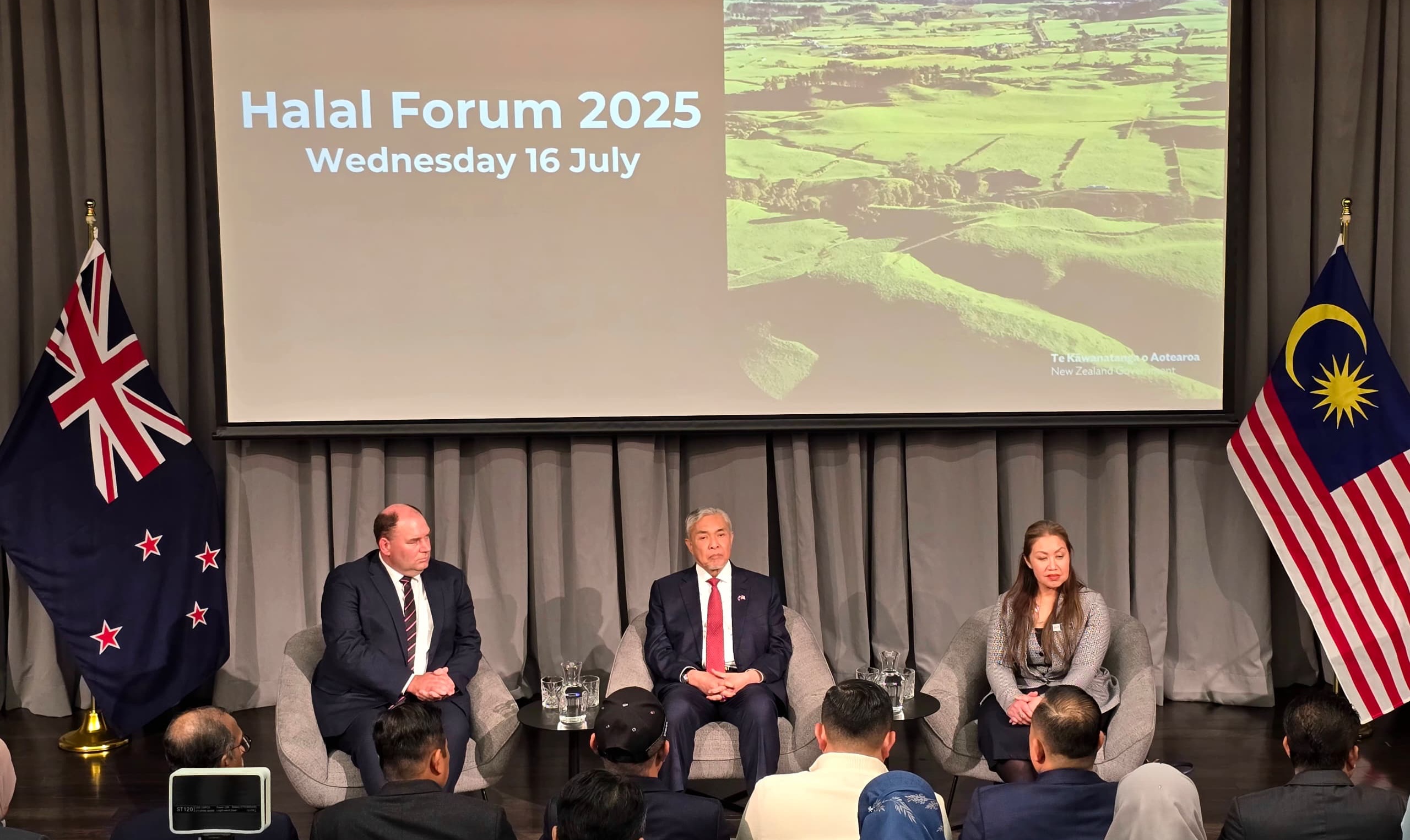
The LOI Exchange Ceremony took place at the National Library, Wellington, and was witnessed by The Right Honourable Dato’ Seri Dr. Ahmad Zahid Hamidi, Deputy Prime Minister of Malaysia and Minister of Rural and Regional Development, and The Honourable Andrew Hoggard, New Zealand’s Minister for Biosecurity and Food Safety, Associate Minister of Agriculture (Animal Welfare, Skills), and Associate Minister for the Environment.
Also present at the ceremony was The Honourable Dato’ Sri Sh Mohmed Puzi Sh Ali, Chairman of UniKL. The LOI was signed by Prof. Ir. Dr. Azman Senin, President/Chief Executive Officer of UniKL, and Dr. Graham Wise, Director of Global Engagement at the UC.
This partnership marks a significant step in strengthening academic and research collaboration between the two universities, with a key focus on student and staff mobility, knowledge exchange, and joint research.
Key areas of collaboration include chemical engineering, halal food systems, and sustainable food production—sectors that are increasingly vital for regional and global sustainability.
Aligned with the United Nations Sustainable Development Goals (SDGs), particularly SDG 2 (Zero Hunger) and SDG 12 (Responsible Consumption and Production), the collaboration aims to foster meaningful academic and research advancements between UniKL and the UC.
It seeks to facilitate joint research initiatives in key areas such as halal food technology, sustainable food production, and chemical and process engineering.
Additionally, the partnership will enable student and staff exchange programmes, including academic visits, research attachments, and cultural immersion activities to strengthen global exposure.
To enhance graduate mobility and employability, both institutions will develop articulation pathways through collaborative programmes, including the 2+2 and 2.5+3 models. The collaboration will also support curriculum co-development, joint supervision, and the sharing of academic best practices.
Moreover, a new 2+2 articulation pathway in the field of agrotechnology will be introduced as part of the initiative, further expanding opportunities for students in specialised and high-impact areas.
The two-year partnership is expected to broaden educational opportunities for UniKL students and boost research outcomes that address food security and environmental resilience.
It also reinforces the strategic positioning of both institutions within the Asia-Pacific and the global higher education landscape.
Looking ahead, UniKL and UC will continue to identify joint research projects, implement student and staff exchange activities, and finalise articulation pathways that align with academic and accreditation standards.