

The Orang Asli community is among the groups most vulnerable to soil-transmitted helminth (STH) infections, a prevalent factor that can hinder healthy growth and development among children.
Research led by Dr. Mehru Nisha from Universiti Kuala Lumpur Institute of Medical Science Technology (UniKL MESTECH) since 2020 found that the majority of Orang Asli children who tested positive for STH infections were aged between three and 16 years.
This silent threat is further underscored by statistics from the World Health Organization (WHO), which estimate that up to 90 percent of children in deprived communities with poor hygiene and sanitation practices are at risk of STH infections.
For Dr. Nisha, efforts to combat the issue must go beyond medication alone, as deworming without behavioural and hygiene interventions offers only short-term relief.
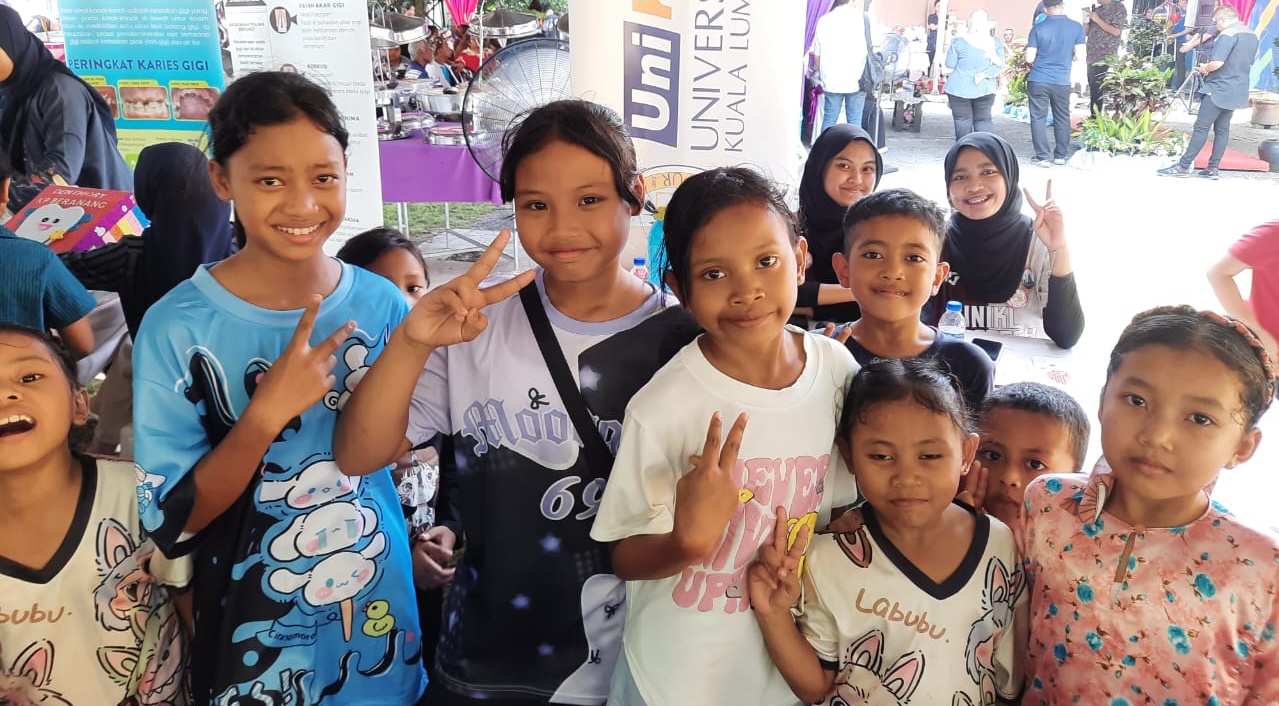
In line with this approach, a community engagement programme focusing on food hygiene education and deworming was conducted on 9 August 2025.
According to data from Hospital Asli Gombak, 36.2 percent of children (97 out of 268) were recorded as experiencing stunted growth in 2024. Of these, 50 percent (31 out of 62) were Orang Asli children from the Hulu Langat area.
The primary contributing factors to stunting include an imbalanced diet, limited awareness of food safety practices, and low household income.
To address these challenges, the Nutrition Unit (Unit Pemakanan) of the Pejabat Kesihatan Daerah (PKD) Hulu Langat, in collaboration with Klinik Kesihatan Semenyih, organised a Health Nutrition Programme at Kampung Asli Sungai Lalang, Semenyih, Selangor.
The programme aimed to provide health education to the Orang Asli community, promote awareness of healthy eating habits, and enhance understanding of general well-being and nutrition.
To strengthen the programme’s impact, Dr. Nisha was invited to deliver a talk on parasite prevention related to raw food consumption, conduct a worm exhibition, and oversee the distribution of deworming medication to the community.
The programme was attended by approximately 200 community members, with Dr. Nisha supported by three Biomedical Science volunteer students who assisted throughout the session.
“Through this programme, we observed a clear increase in awareness of food hygiene and nutrition within the community. Participants were educated on parasite prevention related to raw food consumption, supported by practical demonstrations on proper cleaning techniques,” she said.
“A single dose of albendazole was also administered as part of the deworming effort, with strong community participation throughout the session. Importantly, the community showed a better understanding of how to protect their health while continuing to practise their traditional food habits.
“Following the successful implementation, the deworming programme will be continued with periodic monitoring to assess its long-term effectiveness.”