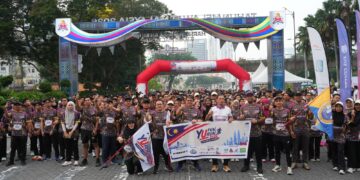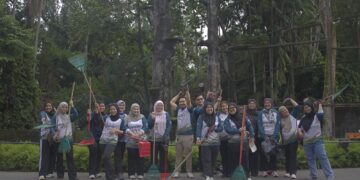


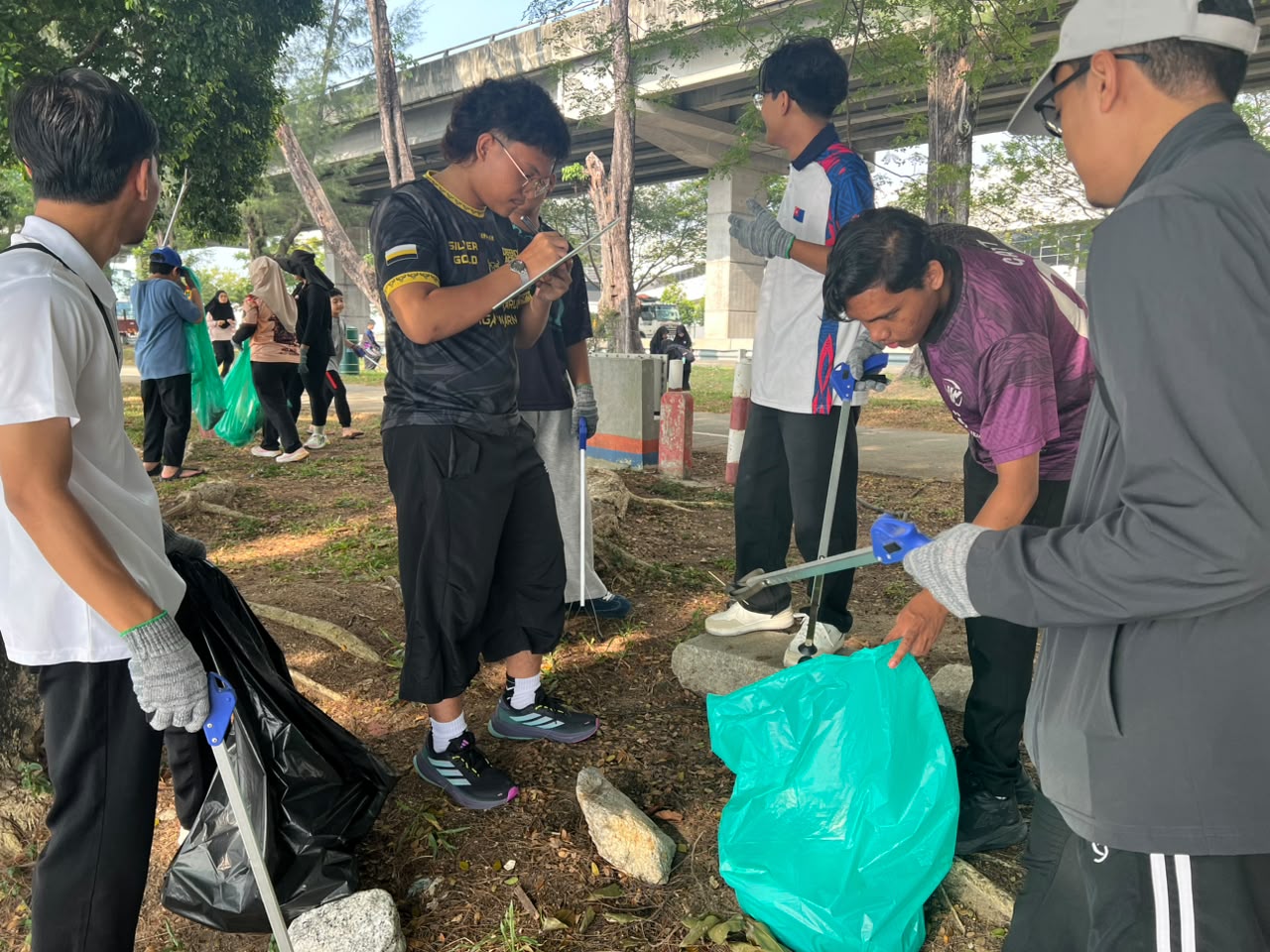
Thirty-two staff and students from Universiti Kuala Lumpur Malaysian Spanish Institute (UniKL MSI) traded the classroom for the coastline on 26 September 2026, joining hundreds of volunteers at Pantai Seagate, Penang, for the International Coastal Cleanup (ICC) 2026.
More than just collecting litter, the initiative allowed UniKL MSI students to become citizen scientists for a day, systematically documenting coastal waste and contributing data to a wider international environmental monitoring effort.
Led by the Centre for Marine & Coastal Studies (CEMACS), Universiti Sains Malaysia (USM), the programme gathered around 250 participants at Kompleks Selera Sri Pantai, Pantai Seagate, in a collective effort to protect Malaysia’s coastal environment and strengthen public awareness of marine conservation.

UniKL MSI was represented by three staff members and 29 students from various academic programmes, with the MSI Foreign Language Club and PEERS Club coordinating participation.
Among the staff involved were Dr. Khong Hou Keat, Spanish lecturer; Siti Annur Ismail, counsellor; and Fazrul Azmi Zulkifli, English lecturer.
Before the shoreline cleanup began, participants were briefed on International Coastal Cleanup procedures and guided by CEMACS personnel on how to collect, classify and systematically record waste found along the coast.
The information gathered will be incorporated into the wider ICC data system, supporting ongoing research, environmental monitoring and marine and coastal conservation initiatives.

For UniKL MSI, the programme demonstrated how experiential learning can extend beyond academic settings by connecting students with real-world sustainability challenges.
“It was encouraging to see our students come together and contribute to a meaningful environmental initiative. This experience reminds us that learning does not stop at the classroom, and that small actions can contribute to a much greater effort,” said Dr. Khong.
The 2026 programme marked UniKL MSI’s fourth participation in the International Coastal Cleanup, reflecting a sustained commitment to environmental responsibility, community engagement and sustainability rather than a one-off volunteering activity.

Through repeated participation, students are exposed not only to the environmental impact of coastal pollution but also to the role of research, data collection and cross-sector collaboration in addressing complex sustainability issues.
The initiative supports the United Nations Sustainable Development Goals, particularly SDG 14: Life Below Water through marine and coastal ecosystem protection, SDG 12: Responsible Consumption and Production through greater awareness of waste and responsible disposal, SDG 13: Climate Action through environmental stewardship, and SDG 17: Partnerships for the Goals through collaboration between universities, communities and environmental organisations.