

Universiti Kuala Lumpur (UniKL) has received international recognition for its long-standing contribution to Malaysia–Japan engineering education, marking more than three decades of academic collaboration, technical talent development and cross-border partnerships.
The university was presented with a Certificate of Appreciation for its contribution to the Malaysia–Japan Twinning Programme during the 50th Anniversary Commemorative Ceremony of Nagaoka University of Technology (NUT), held on 3 October 2026 at the Nagaoka Municipal Auditorium in Niigata Prefecture, Japan.
The recognition was conferred by NUT President, Dr. Shigeharu Kamado, acknowledging UniKL’s sustained commitment to strengthening engineering education and academic cooperation between Malaysia and Japan.
Representing UniKL at the ceremony were Dr. Badli Shah Mohd Yusoff, Dean and Head of Campus of UniKL Malaysia France Institute (UniKL MFI), and Muhammad Zulfahmi Samsudin, Head of Section for Japan Collaboration Programs (JCP).
The recognition formed part of UniKL’s official working visit to Japan from 1 to 7 October 2026, which also focused on advancing international academic partnerships, technological innovation and student mobility.
UniKL’s engineering education partnership with Japan traces its roots to the Higher Education Loan Fund Program (HELP), introduced in the 1990s under Malaysia’s Look East Policy.
The initiative subsequently evolved into the Higher Education Loan Program 2 (HELP2) in 1999 before being institutionalised through the UniKL Japan Universities Programme (UniKL JUP).
Over the years, the collaboration has provided a foundation for cross-border engineering education, connecting Malaysian students with Japan’s technological expertise, academic institutions and industrial practices.
The anniversary celebration also brought together university presidents, institutional leaders and representatives from Japan’s National Institute of Technology (KOSEN) network and international partner universities.
Beyond the commemorative ceremony, the UniKL delegation visited NUT’s DXR Manufacturing Open Innovation Center and Regional GX (Green Transformation) Innovation Co-creation Center.
The visits offered insights into Japan’s advanced manufacturing technologies, sustainable innovation practices and Monodzukuri, the Japanese philosophy of craftsmanship and manufacturing excellence.
These experiences are expected to contribute to the enhancement of industry-oriented curricula at UniKL MFI, particularly in integrating practical engineering knowledge, digital transformation and sustainable manufacturing approaches.
The engagement reflects UniKL’s emphasis on strengthening Technical and Vocational Education and Training (TVET) through international exposure and industry-relevant learning.
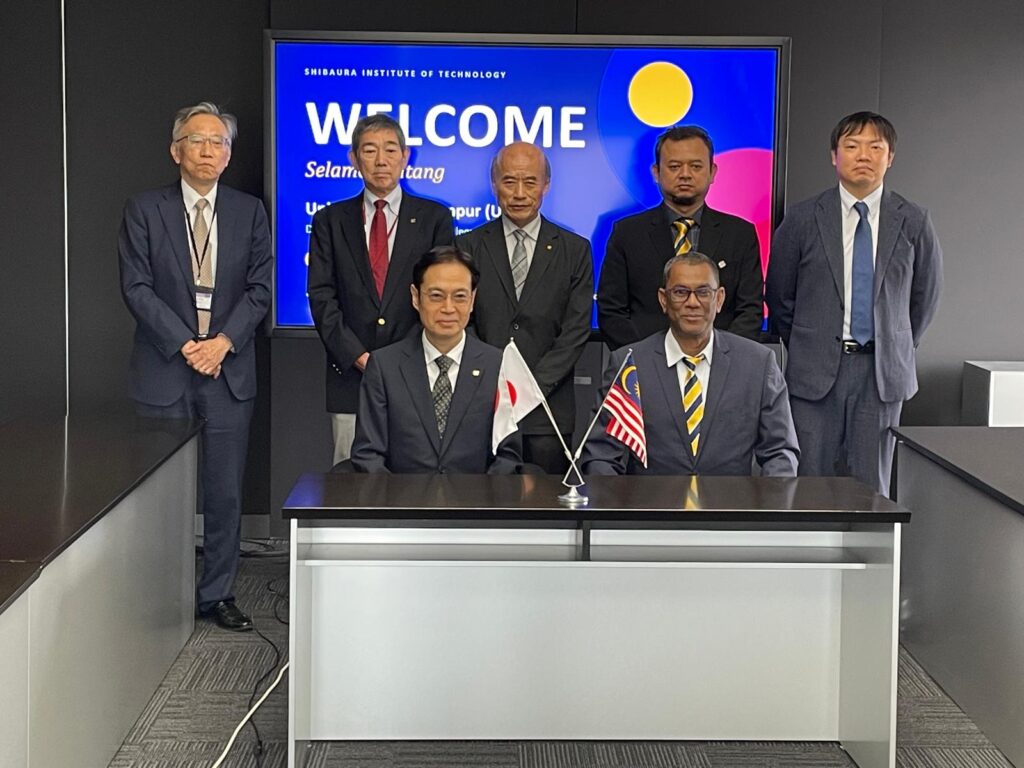
As part of the working visit, UniKL also participated in high-level bilateral discussions at the Toyosu Campus of Shibaura Institute of Technology (SIT) in Tokyo on 5 October 2026.
The strategic roundtables focused on advancing the next phase of the UniKL Japan Universities Programme, known as UniKL JUP 2.0, beyond June 2027.

Among the key participants were SIT Vice President and President of the Japanese University Consortium for Transnational-Education (JUCTe), Prof. Dr. Hitoshi Nakamura, and Takushoku University Trustee Chair and JUCTe Managing Director, Takumi Okado.
Senior representatives from SIT, Takushoku University and the JUCTe Secretariat also participated in the discussions.
The engagements provided an opportunity to strengthen institutional relationships and explore future directions for transnational education, engineering talent development and academic cooperation between Malaysian and Japanese universities.
The recognition by Nagaoka University of Technology reflects UniKL’s continued efforts to strengthen its international academic network and enhance the global relevance of its engineering and TVET programmes.
The initiatives also contribute to the United Nations Sustainable Development Goals (SDGs), particularly SDG 4 (Quality Education), SDG 9 (Industry, Innovation and Infrastructure) and SDG 17 (Partnerships for the Goals).