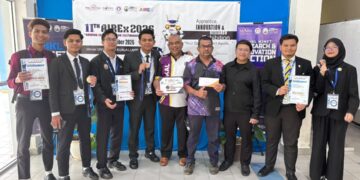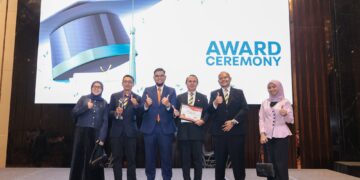

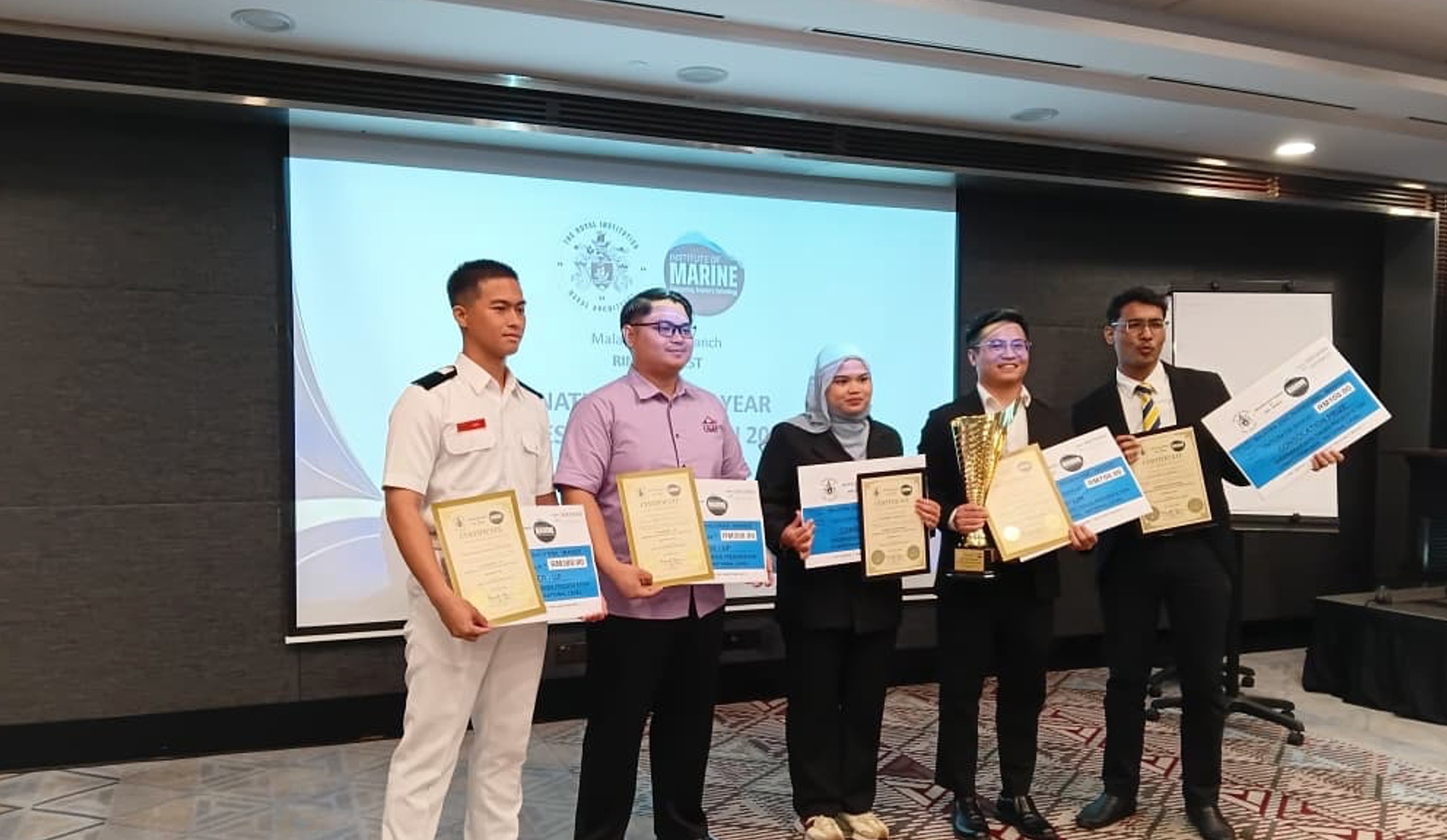
Universiti Kuala Lumpur Malaysian Institute of Marine Engineering Technology (UniKL MIMET) has secured fourth place at the MJB RINA–IMarEST Undergraduate Thesis Presentation Competition (UGTPC) 2026, highlighting the university’s growing emphasis on undergraduate research, renewable energy innovation and sustainable marine engineering.
The competition brought together participants from five Malaysian universities, providing a platform for undergraduate researchers to showcase their technical knowledge, research findings and engineering solutions to real-world challenges.
Representing UniKL, Zarrif Hairish Zariman presented his undergraduate research project titled “Comparative Study on Energy Extraction Performance Between Vertical and Horizontal Axis Tidal Turbines in Dinding River, Perak.”
Supervised by Dr. Muhammad Adli Mustapa, the research explored the energy extraction performance of two tidal turbine configurations, focusing on their potential application in the Dinding River, Perak.
The study examined vertical-axis and horizontal-axis tidal turbines to better understand how different turbine designs could influence energy extraction in local river and marine environments.
By addressing the potential of tidal energy as a renewable energy source, the research contributes to discussions on alternative energy technologies and the importance of selecting suitable turbine configurations for specific environmental conditions.
Zarrif’s achievement also reflects UniKL MIMET’s commitment to strengthening research-based learning and providing undergraduate students with opportunities to apply engineering principles beyond the classroom.
Participation in the UGTPC 2026 enabled students to gain exposure to academic and professional research presentation environments, while enhancing their technical communication, analytical thinking and research presentation skills.
The fourth-place achievement reinforces UniKL’s commitment to developing technically competent graduates while encouraging student-led research that explores practical solutions to sustainability and engineering challenges.
The research is aligned with the United Nations Sustainable Development Goals (SDGs), particularly SDG 7: Affordable and Clean Energy, through its exploration of tidal energy as a potential renewable energy source.
It also supports SDG 9: Industry, Innovation and Infrastructure, by advancing research into marine energy technologies, and SDG 4: Quality Education, through undergraduate research development, academic mentorship and experiential learning.