

Universiti Kuala Lumpur (UniKL) students have strengthened the university’s growing profile in robotics and technology innovation after being crowned World Champions in two university-level categories at the World Future Championship (WFC) 2026.
The achievement, proudly celebrated by the UniKL Centre for STEM Enhancement & TVET (CSET), highlights the university’s commitment to nurturing innovation, technical excellence and future-ready talent through hands-on learning and international competition.
Held at Multimedia University (MMU), Cyberjaya, from 2 to 4 October 2026, the international championship brought together more than 1,000 young innovators, educators and delegates to showcase advancements in robotics, engineering and emerging technologies.
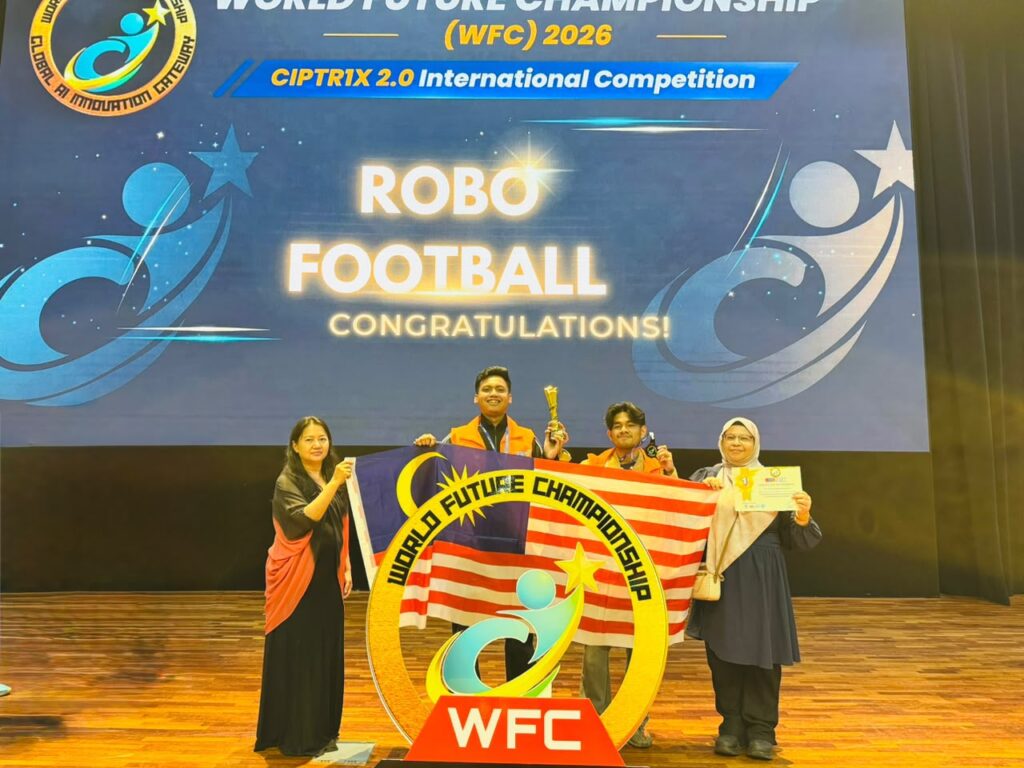
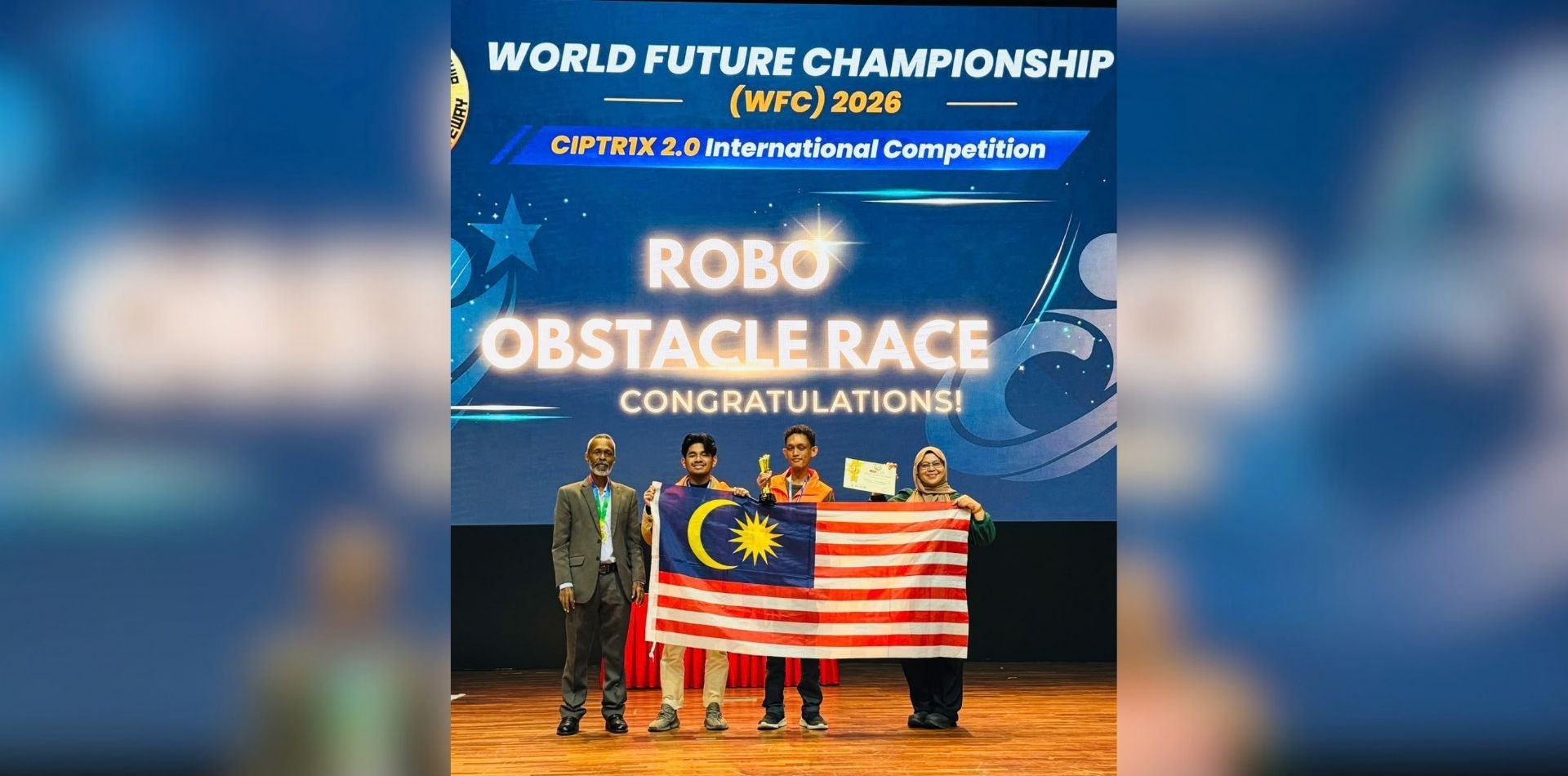
Representing UniKL Malaysian Institute of Industrial Technology (UniKL MITEC), Muhammad Adli Hakim Mat Nawi and Muhammad Hazamulrazak Hashim emerged champions in the Robo Obstacle Race category.
Muhammad Adli Hakim later secured a second world championship title alongside Norhayreis Hafeiy Norsyahreil in the RoboSport Football category.
The competing teams were under the patronage of Dr Zirawani Baharum.
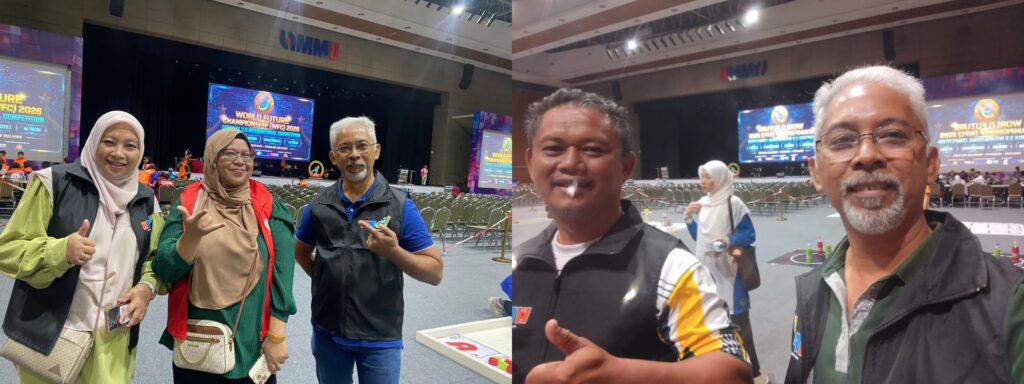
UniKL’s involvement at WFC 2026 extended beyond student participation, with academics from UniKL Malaysian Spanish Institute (UniKL MSI) and UniKL Malaysian Institute of Marine Engineering Technology (UniKL MIMET) invited to serve as judges for the primary and secondary school competition categories.
Their participation reflects the expertise of UniKL academics within the wider science, technology, engineering and mathematics (STEM) ecosystem, contributing to knowledge-sharing and the development of the next generation of innovators.
Following their victories, the UniKL champions were also invited, with partial sponsorship, to participate in an international competition in Greece in February 2027.
The opportunity will provide another platform for the students to represent UniKL and Malaysia internationally while expanding their exposure to global robotics communities and technological innovation.
The achievement supports SDG 4: Quality Education by demonstrating the value of experiential learning, academic mentorship and technology-driven education.
It also aligns with SDG 9: Industry, Innovation and Infrastructure through the development of robotics and engineering capabilities, as well as SDG 17: Partnerships for the Goals through international engagement, knowledge exchange and participation in global innovation platforms.