


For medical students, some of the most valuable lessons begin when the classroom ends.
That idea came to life from 14 to 20 September 2026 as the White Coat Without Borders: Outbound Mobility Program 2.0 — Macau Edition brought students into hospitals, community organisations, university classrooms and cultural settings beyond Malaysia.
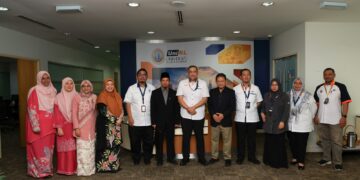
Following its inaugural edition at Universitas Airlangga, Surabaya in 2025, the programme returned this year at Macau University of Science and Technology (MUST) in collaboration with the Asian Medical Students’ Association (AMSA) Macau.
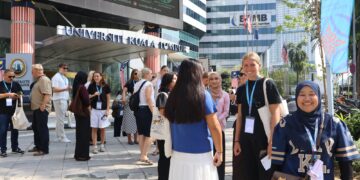
Over seven days, students from the Medical Society (MedSoc), Universiti Kuala Lumpur Royal College of Medicine Perak (RCMP) and AMSA Macau experienced a blend of international medical education, clinical observation, research exchange, community engagement and cross-cultural learning.

The journey began with an introduction to basic Cantonese, including phrases relevant to everyday communication and hospital settings.
Beyond helping students navigate their surroundings, the session reinforced an important part of healthcare, the ability to communicate with people from different linguistic and cultural backgrounds.
Community engagement became a major focus on 15 September 2026 when students visited the Association for the Rehabilitation of Drug Abusers of Macau in Coloane.
There, they gained exposure to Macau’s approaches to substance-abuse rehabilitation, including detoxification, prevention programmes and harm-reduction strategies.
The experience widened students’ understanding of healthcare beyond clinical treatment by highlighting the social and community dimensions of recovery.

Later, students collaborated with the Macau Association for the Hearing Impaired in a community service programme that combined creativity, communication and healthcare.
Participants learned basic sign language, joined community members in a lantern-making activity and conducted basic medical check-ups.
The session placed human connection at the heart of medical education, allowing students to apply clinical knowledge while engaging directly with the community.
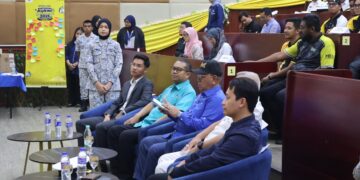
The programme moved into the future of healthcare on 16 September 2026 through an academic session at MUST focusing on Artificial Intelligence (AI) in healthcare management.
Students explored how AI is influencing areas such as diagnostics, hospital management and patient-care delivery, while gaining exposure to emerging technologies shaping healthcare systems across Asia.
They also attended classes alongside MUST medical students, giving them an opportunity to observe another medical curriculum and exchange perspectives on approaches to medical education.
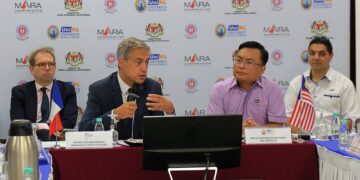
The academic experience continued through a joint medical research presentation session involving MedSoc and AMSA Macau students.

Through the presentation of research findings, methodologies and ideas, students strengthened their exposure to international research collaboration, knowledge exchange and cross-border academic networking.
Clinical exposure took centre stage on 17 September 2026 with a visit to Kiang Wu Hospital, one of Macau’s established healthcare institutions.
During the clinical observation, students gained first-hand insights into hospital workflows and patient-care practices in a healthcare environment different from their own.
On 18 September 2026, students explored Traditional Chinese Medicine (TCM) through lectures on its principles and philosophy, followed by a clinical simulation facilitated by MUST lecturers.
The experience exposed them to another perspective on healthcare and illustrated how traditional and modern approaches continue to coexist within medical education and clinical practice.
The programme supports the United Nations Sustainable Development Goals (SDGs), particularly SDG 3: Good Health and Well-Being through health education and community engagement, SDG 4: Quality Education through international experiential learning, SDG 10: Reduced Inequalities through engagement with vulnerable and differently abled communities, and SDG 17: Partnerships for the Goals through collaboration between student organisations and higher education institutions across borders.