

Universiti Kuala Lumpur (UniKL) is expanding its international research collaboration in aerospace technology, with a focus on improving unmanned aerial vehicle (UAV) navigation systems and addressing electromagnetic interference through research engagement with Indonesia’s Institut Teknologi Bandung (ITB).
The collaboration took place under the UniKL Global Research Mobility Incentive 2026, held from 9 to 13 September 2026, involving Dr Nurhakimah Norhashim from the Unmanned Aerial System Research Cluster at Universiti Kuala Lumpur Malaysian Institute of Aviation Technology (UniKL MIAT).
The five-day programme brought together researchers from Malaysia and Indonesia to exchange technical expertise, conduct experimental investigations and explore joint research opportunities in UAV technology and aerospace engineering.
A key highlight was an investigation into Frequency Selective Surface (FSS) filters, a technology with potential applications in protecting UAV navigation systems against electromagnetic interference and signal jamming.

Conducted at ITB’s Radio Telecommunication and Microwave Laboratory, School of Electrical Engineering and Informatics, the research involved testing fabricated FSS prototypes in an anechoic chamber using horn antennas and a network analyser.
The experiments compared square and hexagonal FSS geometries to examine their electromagnetic transmission characteristics and potential effectiveness in reducing interference affecting UAV navigation.
Building on these investigations, Dr Nurhakimah held research discussions with Professor Joko Suryana and Ir Dr Faizal Arifurrahman on a proposed collaborative project focusing on flexible substrate-based FSS technology.
The proposed study aims to replace conventional rigid FR-4 substrates with flexible materials, potentially enabling electromagnetic filtering components to be integrated more effectively into curved UAV structures.
Such developments could contribute to more adaptable UAV designs and improved navigation reliability, particularly in environments where electromagnetic interference presents operational challenges.
Beyond laboratory research, the programme provided opportunities for practical UAV testing and technology evaluation.

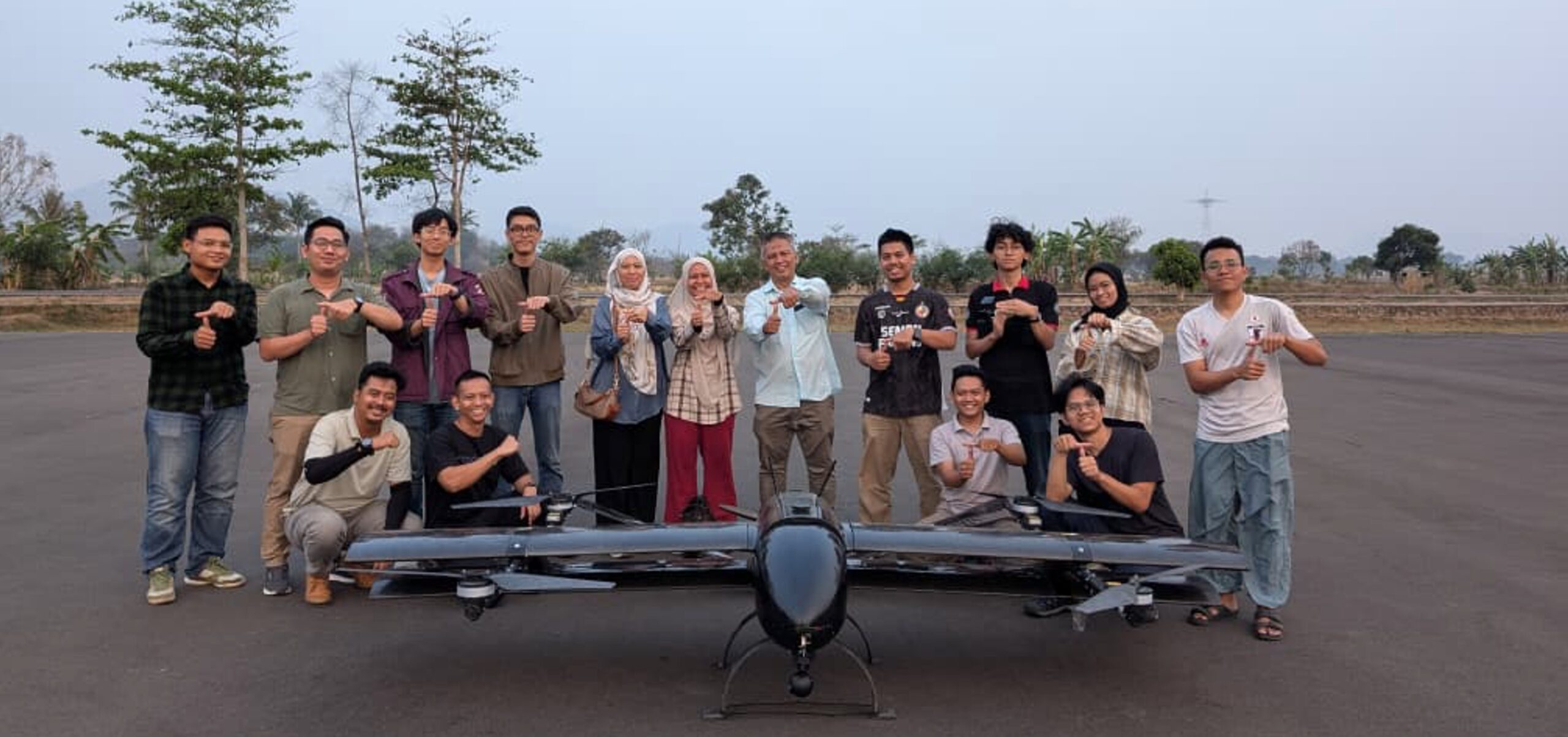
At Lanud Suparlan in Batujajar, Dr Nurhakimah participated in MANTIS UAV flight-testing activities under the supervision of Associate Professor Dr Mochammad Agoes Moelyadi.
Two flight tests were conducted to evaluate the UAV navigation system following the integration of a new sensor, providing practical insights into navigation performance and system integration.
Research engagement also extended to the ZEKE04 Indoor UAV, an autonomous platform designed to operate in GPS-denied environments through alternative navigation and positioning technologies.
Discussions with Dr Yazdi offered further perspectives on autonomous UAV operations, an emerging research area with potential applications in industrial inspection, indoor navigation and other environments where conventional satellite positioning is unavailable.
In addition to advancing technical research, the mobility programme supported academic knowledge exchange and research capacity building.
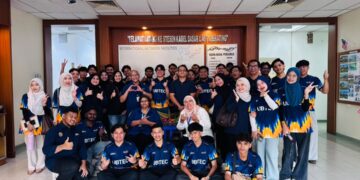
Dr Nurhakimah delivered a two-hour workshop titled Research Foundations Workshop: Crafting the Title, Objectives & Literature Review to undergraduate and postgraduate students at ITB.
The session covered essential research skills, including developing effective research titles, formulating measurable objectives, identifying research gaps and conducting structured literature reviews.

The programme was hosted by Associate Professor Dr Annisa Jusuf from ITB’s Faculty of Mechanical and Aerospace Engineering, who facilitated research discussions, academic engagement and opportunities for future institutional collaboration.
The engagements have also opened avenues for potential joint research proposals under the Collaborating Research Grant Scheme (CRGS), particularly in UAV technologies and electromagnetic interference mitigation.
This aligns with the United Nations Sustainable Development Goals (SDGs), particularly SDG 9: Industry, Innovation and Infrastructure, through research into advanced UAV systems and aerospace technologies, and SDG 17: Partnerships for the Goals, through international research collaboration and knowledge exchange.