

A satellite signal may begin its journey thousands of kilometres above Earth, but the information it carries could help researchers better understand what is happening in the atmosphere below.
This potential is at the heart of a 2026 international research collaboration between Universiti Kuala Lumpur Malaysian Institute of Aviation Technology (UniKL MIAT) and Ewha Womans University, Republic of Korea, bringing together expertise in satellite communications, atmospheric science and climate research.
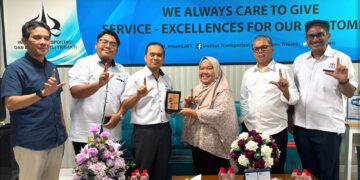
The collaboration emerged through an international research mobility programme involving Assoc. Prof. Ts. Dr. Harlisya Harun, Head of the Satellite Communication and Avionics System Integration (SCASI) TVET Collaboration Hub at UniKL MIAT, and researchers at Ewha led by Professor Dr. Yong-Sang Choi, alongside Dr. Gyuyeon Kim.
At the centre of their research is the Global Navigation Satellite System (GNSS), technology commonly associated with positioning and navigation.
As GNSS signals travel from satellites to receivers on Earth, they are affected by atmospheric conditions.
Through specialised processing and interpretation, these changes can provide valuable information on atmospheric water vapour and how it evolves.

The research at Ewha explored the use of GNSS Continuously Operating Reference Stations (GNSS CORS) to examine GNSS-derived atmospheric information in relation to rainfall.
The approach offers a different perspective on satellite-to-ground communication, demonstrating how infrastructure traditionally used for navigation and communications could also support environmental monitoring, atmospheric observation and climate-related research.
For UniKL MIAT, the collaboration expands the research potential of its SCASI TVET Collaboration Hub, which focuses on satellite communications, ground-segment systems, systems integration and related technologies while connecting research with technology and human-capital development.
Assoc. Prof. Ts. Dr. Harlisya said the significance of international research collaboration goes beyond working with institutions in different countries.
“Its value comes from bringing complementary strengths together around a meaningful research question and allowing each partner’s expertise to strengthen the work.”
The collaboration aligns strongly with the United Nations Sustainable Development Goals (SDGs), particularly SDG 9: Industry, Innovation and Infrastructure through the advancement of satellite and ground-segment technologies; SDG 13: Climate Action through atmospheric and precipitation research; and SDG 17: Partnerships for the Goals through international research collaboration between Malaysia and the Republic of Korea.