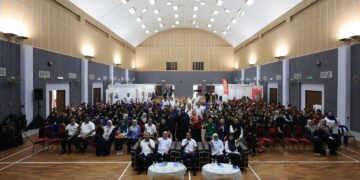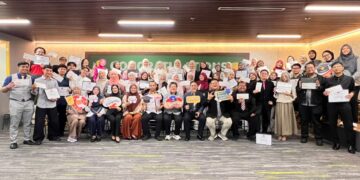


A simple experiment in creating body mist became an exciting introduction to science and engineering for 75 students of SMK Labu Besar, as Universiti Kuala Lumpur Malaysian Spanish Institute (UniKL MSI) brought hands-on Science, Technology, Engineering and Mathematics (STEM) learning into the school.
The initiative, organised through UniKL MSI’s Centre for Women Advancement and Leadership (CWAL), was part of the CWAL STEM Knowledge Transfer: Young Scientist to Future Engineer programme, aimed at nurturing scientific curiosity and encouraging secondary school students to explore future opportunities in engineering, technology and innovation.
Supported by the Yayasan UniKL Inclusive Youth Leadership Knowledge Transfer and Community Empowerment Grant 2026, the programme involved lecturers from UniKL MSI’s Mechanical Section and formed part of the institute’s MSI ke Desa community outreach initiative.

One of the programme’s highlights was an interactive activity titled “Mini Body Mist Scientist: The Science of Scent”, which transformed everyday product formulation into a practical STEM learning experience.
Students were guided through the process of calculating ingredient percentages, measuring materials accurately and formulating their own body mist products, allowing them to apply scientific principles and mathematical concepts beyond conventional classroom lessons.
Through the activity, participants gained early exposure to product development and engineering-related problem-solving, demonstrating how fundamental STEM knowledge can be applied to real-world processes.
Beyond introducing practical scientific skills, the programme sought to encourage students to consider pursuing the Science stream in Form 4, helping them recognise the educational pathways that could lead to future careers in engineering and technology.

The initiative also highlighted UniKL MSI’s commitment to widening access to quality STEM education through university–school engagement, particularly by bringing university expertise directly to local communities.
The programme aligns with the United Nations Sustainable Development Goals (SDGs), particularly SDG 4: Quality Education, through inclusive and practical STEM learning opportunities; SDG 9: Industry, Innovation and Infrastructure, by cultivating early interest in engineering and innovation; and SDG 17: Partnerships for the Goals, through collaboration and knowledge sharing between the university and school community.