

Universiti Kuala Lumpur (UniKL) is strengthening its international research network in ASEAN through a research mobility initiative focused on logistics quality, technology adoption and competency development in higher Technical and Vocational Education and Training (TVET).
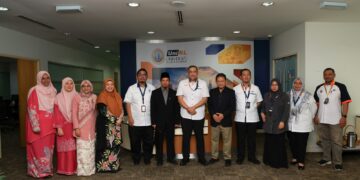
From 20 to 24 July 2026, Assoc. Prof. Ts. Dr. Sallaudin Hassan of the Universiti Kuala Lumpur Malaysian Institute of Industrial Technology (UniKL MITEC) completed a five-day research mobility programme at Institut Transportasi dan Logistik (ITL) Trisakti, Jakarta, Indonesia, under the UniKL Global Research Mobility (UGRM) 2026 initiative.
The mobility reflects UniKL’s efforts to advance international research collaboration, academic excellence and industry-relevant applied research, particularly in logistics and transportation.
During the programme, Assoc. Prof. Ts. Dr. Sallaudin collaborated with researchers from ITL Trisakti and Universiti Tun Hussein Onn Malaysia (UTHM) on a study titled “A Structural Model of Training, Quality Culture, and Technology Adoption Influencing Quality Awareness and Logistics Competency in Higher TVET Education Institutions.”
For the record, the ITL Trisakti team was led by Dr Nursery Alfaridi S. Nasution, with Dr Asyraf of Universiti Tun Hussein Onn Malaysia (UTHM) also contributing to the initiative.

The study examines how training effectiveness, quality culture, technology adoption and quality awareness influence logistics competency among students in higher TVET institutions.
Researchers carried out a series of technical activities including instrument validation, pilot testing, data screening, descriptive analysis, measurement model assessment and structural model analysis.
These activities eventually contributed to the development of a comprehensive Logistics Quality Framework.
The framework explains the relationships between quality culture, technology adoption, training effectiveness, quality awareness and logistics competency.
Findings from the study indicate the important role of quality culture in strengthening quality awareness, which in turn contributes to logistics competency development.
According to Assoc. Prof. Ts. Dr. Sallaudin, the framework could serve as a useful reference for higher education institutions, logistics educators and policymakers seeking to strengthen logistics education outcomes.
By integrating quality management principles, effective training and appropriate technology adoption, higher education institutions can better prepare future professionals for the evolving requirements of the logistics sector.
Beyond the research itself, the programme also expanded institutional engagement between UniKL and ITL Trisakti.

Meetings were held with the Rector, Vice Rectors, Deans and senior academic staff of ITL Trisakti, culminating in the signing of an Implementation Agreement to formalise future research cooperation between the institutions.
The partnership will further extend to international academic engagement, with UniKL researchers participating in the GrostLog International Conference 2026, organised by ITL Trisakti, to share research findings with academics and industry experts in logistics and transportation.
Another significant development is UniKL’s invitation to explore participation in a multinational research project titled “Identifying ASEAN-Specific Car-Motorcycle Blind Spot Conflict Scenarios in Mixed Traffic: A Comparative Study across Indonesia, Malaysia and Thailand.”
The collaboration also aligns with the United Nations Sustainable Development Goals (SDGs), particularly SDG 4: Quality Education, through the enhancement of TVET competency and educational quality; SDG 9: Industry, Innovation and Infrastructure, through industry-oriented logistics research and technology adoption; and SDG 17: Partnerships for the Goals, through international research partnerships and knowledge exchange.