


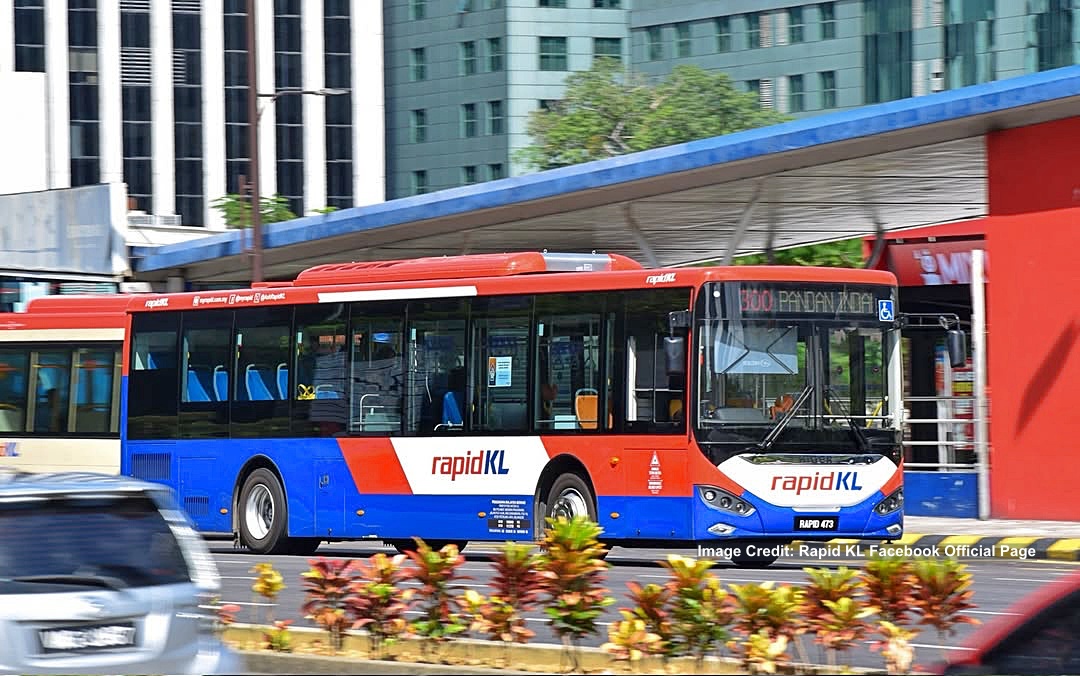
Rapid Bus has launched a proof-of-concept (POC) project to convert four diesel buses into electric vehicles.
Partnering with two local firms, the operator is testing whether retrofitting can offer a viable alternative to buying a new fleet.
The trial involves buses with an average age of 11 years. If successful, the initiative could extend the service life of older vehicles by up to seven years while accelerating the company’s transition to a fully electric fleet.
Rapid Bus, which operates Rapid KL, Rapid Penang and Rapid Kuantan, in a statement, said the conversion process aimed to reduce capital expenditure and lower carbon emissions. The POC is scheduled for completion by the end of this year.
Automotive engineer Haidee Che Rizmin likened the retrofitting plan to giving old diesel buses “a new heart” by allowing them to operate at a performance level close to that of a new vehicle.

“There are no issues with the buses’ chassis in terms of long-term service, but the powertrain systems will wear out over time and require a major overhaul after a certain mileage, and that will incur substantial costs.
“For Rapid Bus, this overhaul typically occurs at around 1,000,000km or about 10 years of bus operation,” said Haidee, who is also a senior specialist in the automotive engineering section of Universiti Kuala Lumpur-Malaysia France Institute.
While a new diesel engine might match the performance of an electric conversion, he said the latter would offer significantly lower fuel and maintenance costs over time.
Though Rapid Bus has not given any estimate for the pilot project’s conversion cost, Haidee said an electric powertrain would be more favourable when fleet-wide operational cost savings and potential government incentives were to be considered over the long term.
“Electrifying old diesel buses is a strategic approach for Rapid Bus, as it is about 30% to 50% cheaper than acquiring new electric buses,” he said.
“In addition, modern buses using Euro 5 diesel engines require more chemicals for exhaust after treatment, which increases operational costs. Electric motors are also more environmentally-friendly than diesel engines.”
Regarding range concerns, Haidee suggested adopting the modular battery designs common in most commercial electric vehicles.
“The design allows the manufacturers to adjust the batteries’ capacity based on their clients’ requirements,” he said.
“I believe Rapid Bus requires about 250km per charge to cover daily operations, which is comparable to a diesel-powered bus.”
Haidee added that electric buses generally have lower maintenance costs because they have fewer moving and mechanical parts, reducing the degree of wear and tear and the need for lubricants such as engine oil.
“The cost of electricity is also usually lower, or at least comparable to that of diesel fuel, since Rapid Bus will likely be charged commercial electricity tariff rates,” he said.
Note: This article was first published in The Star and features insights from Mr Haidee Che Rizmin of Universiti Kuala Lumpur Malaysia France Institute (UniKL MFI). His views are aligned with UniKL’s ongoing efforts to support Malaysia’s achievement of the Sustainable Development Goals (SDGs), particularly SDG 7: Affordable and Clean Energy, SDG 11: Sustainable Cities and Communities, and SDG 13: Climate Action.