


The 5th International Conference on Medical Science Technology (ICMST 2026), organised by Universiti Kuala Lumpur Institute of Medical Science Technology (UniKL MESTECH), successfully concluded after two days of scientific exchange, innovation and multidisciplinary collaboration at Concorde Hotel Kuala Lumpur on 8-9 September 2026.
Carrying the theme “Transforming Health, Empowering Communities,” ICMST 2026 provided a platform for researchers, academics, healthcare professionals, industry players, as well as students to share research, establish new collaborations, and exchange perspectives on increasingly complex health challenges.
The conference placed particular emphasis on breaking traditional disciplinary boundaries and bringing science, technology, healthcare and industry together to develop innovative solutions that can improve health and benefit communities.
In his opening address, Ts. Dr. Mohamed Zul Fadhli Khairuddin, Dean / Head of Campus, UniKL MESTECH, highlighted that rapid advances in medical science, artificial intelligence, digital technologies, and other healthcare innovations are creating new opportunities in disease prevention, diagnosis, treatment and healthcare delivery.

He stressed that meaningful progress in healthcare depends on collaboration across disciplines, and encouraged participants to use ICMST 2026 to build partnerships that continue beyond the conference.
Echoing this aspiration, Ts. Dr. Noor Arniwati Mat Daud, Convenor of ICMST 2026, emphasised the importance of translating research into real-world impact while contributing to the United Nations Sustainable Development Goals (SDGs).
She highlighted the conference’s role in connecting research, innovation and sustainability to advance health outcomes, address community needs and empower communities towards a healthier and more sustainable future.
ICMST 2026 welcomed participation from Malaysia, Cambodia, Thailand, Indonesia, Singapore, China, Kazakhstan, Nigeria and the United Kingdom, reflecting the conference’s growing international reach and commitment to strengthening global research networks.

The scientific programme featured distinguished speakers from Malaysia and abroad, covering topics ranging from healthcare innovation, community health sustainability and translational research to environmental justice, AI-enabled screening and diagnosis, infectious diseases, occupational health and biomedical applications.
A key highlight was the plenary forum, “Innovations in Healthcare: Translating Research into Accessible Healthcare for Sustainable Communities,” featuring four distinguished panellists: Academician Distinguished Professor Datuk Dr. Looi Lai-Meng of Universiti Malaya Medical Centre; Prof. Dr. Mohamad Aljofan of Nazarbayev University, Kazakhstan; Prof. Dr. Shamsul Bahari Shamsudin of Universiti Malaysia Sabah; and Prof. Ts. Dr. Muhammad Lokman Md Isa of International Islamic University Malaysia.
Moderated by Assoc. Prof. Ts. Dr. Izuddin Fahmy Abu of UniKL MESTECH, the forum explored a central challenge in healthcare innovation: moving excellent research beyond laboratories and publications to create real-world solutions that are accessible, meaningful and sustainable.
The conference also featured oral and poster research presentations, with outstanding presenters receiving industry-sponsored awards in recognition of excellence in scientific communication.
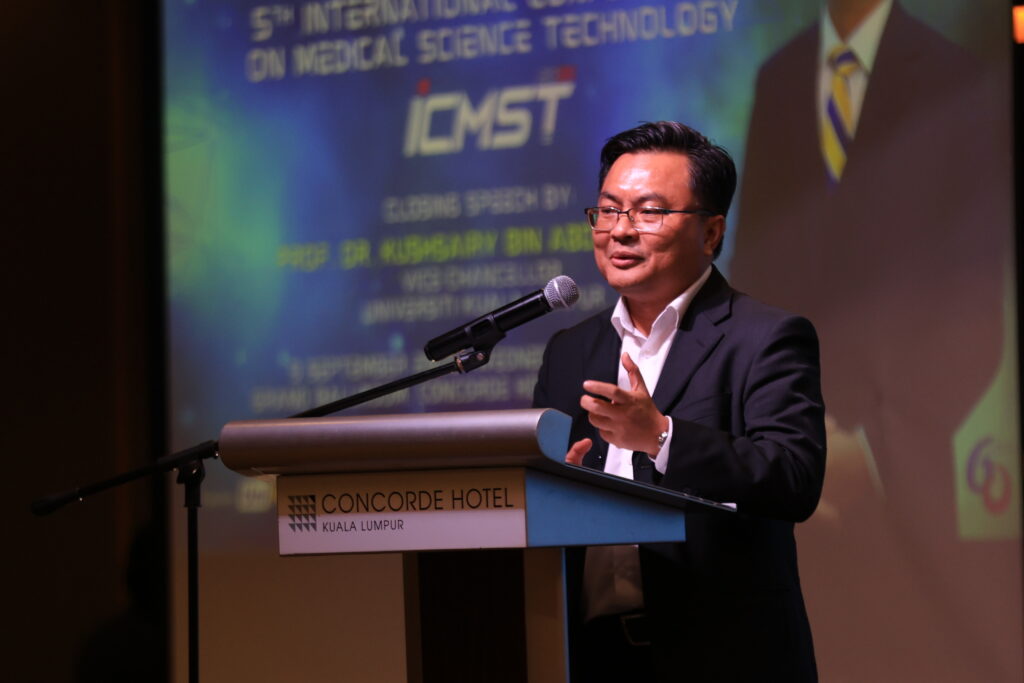
The ICMST 2026 Closing Ceremony was graced by Prof. Dr. Kushsairy Abdul Kadir, Vice-Chancellor of UniKL.
Also in attendance were Prof. Ir. Dr. Azmi Hassan, Deputy Vice-Chancellor, Research & Enterprise, UniKL; Pn. Hazlina Jaafar, Deputy Director, Strategic Planning Division, MARA; Ts. Dr. Mohamed Zul Fadhli Khairuddin; Assoc. Prof. Dr. Tong Woei Yenn, Director, Centre for Research & Innovation (CoRI), UniKL; Dr. Nadia Razali, Director, UniKL International Office (UIO); and Ts. Dr. Noor Arniwati Mat Daud.
In his closing address, Prof. Dr. Kushsairy emphasised that universities today must go beyond their traditional roles as centres of teaching and learning to become catalysts for innovation, drivers of commercialisation, incubators of talent and trusted partners in nation-building.

He further stressed that the value of scientific excellence should ultimately be measured by the positive difference it creates in people’s lives.
Notably, the conference particularly supports SDG 3: Good Health and Well-Being through research and innovation aimed at improving health outcomes; SDG 9: Industry, Innovation and Infrastructure through medical technology, AI-enabled healthcare and translational research; and SDG 17: Partnerships for the Goals through international academic, healthcare and industry collaboration.