

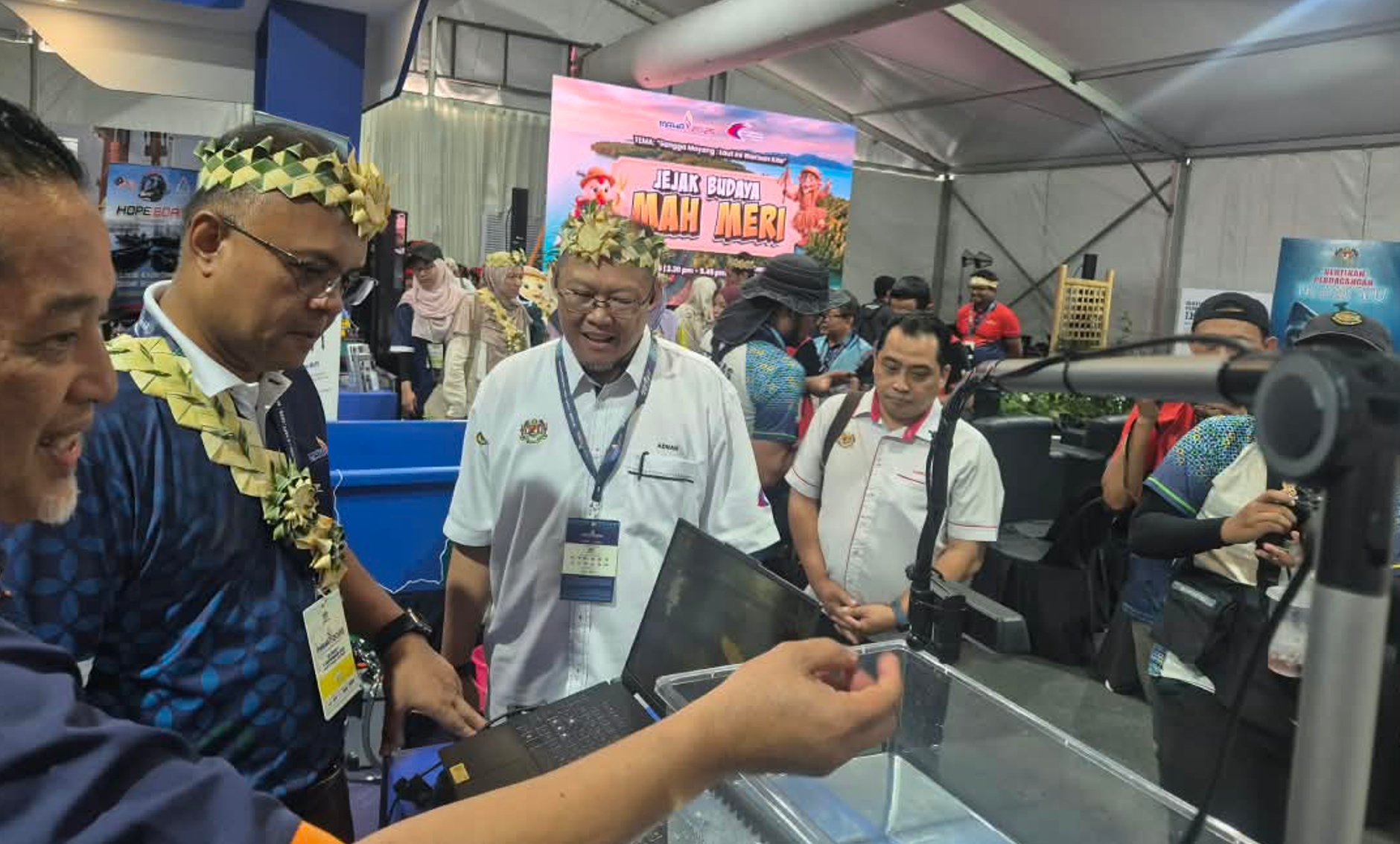
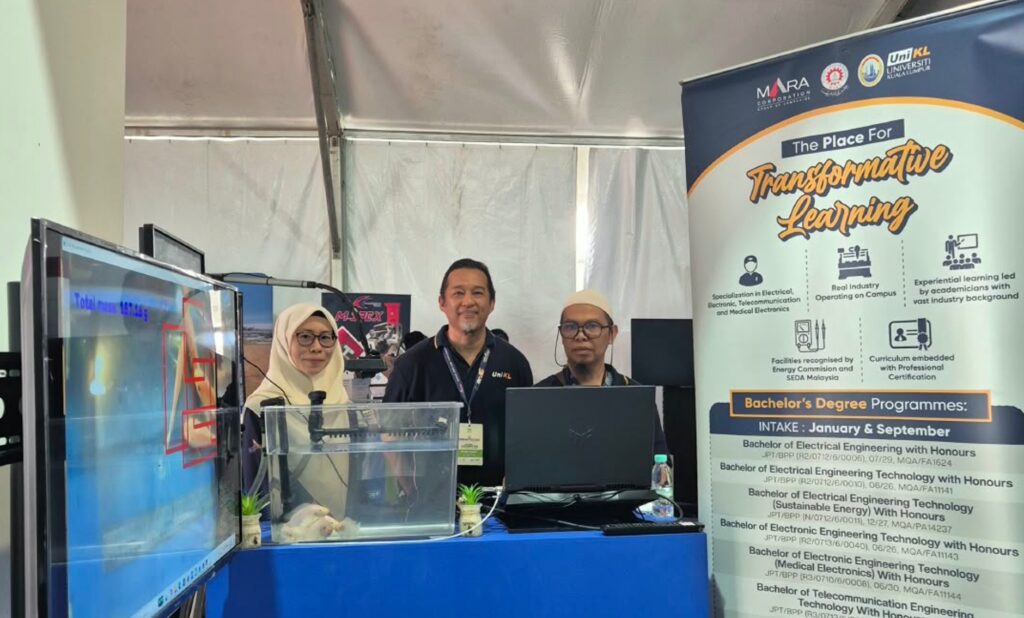
Researchers from Universiti Kuala Lumpur British Malaysian Institute (UniKL BMI) showcased iFishWeight, an artificial intelligence (AI)-powered fish measurement system, at the Malaysia Agriculture, Horticulture and Agrotourism Exhibition (MAHA 2026), held from 28 August to 6 September 2026 at the Malaysia Agro Exposition Park Serdang (MAEPS).
The innovation enables researchers and aquaculture operators to estimate a fish’s length and weight using camera-based technology, without physically handling or lifting the fish.
By reducing the need for manual measurements, the system offers a more efficient and less stressful approach to fish monitoring.
The project originated in 2023 as an Industry-Based Final Year Project (IFYP) undertaken by Muhammad Firdhaus Sanusi, an undergraduate Electronics Technology student under the supervision of Dr Mohd Zaki Ayob.
It was developed in response to a real-world challenge identified by the Fisheries Research Institute (FRI) Glami Lemi in Jelebu, Negeri Sembilan.
Traditional fish sampling requires researchers to manually handle, measure and weigh fish, a time-consuming process that can cause stress and, in some cases, mortality.
Recognising these challenges, the UniKL BMI team explored the application of AI and camera-based measurement technology to improve fisheries research practices.
Initially trained using tilapia measurement data provided by FRI, iFishWeight detects a fish’s body length from head to tail through a camera and uses the information to estimate its weight without a conventional weighing scale.
The system has undergone continuous improvements by researchers from UniKL BMI’s Electronics Technology Section, with plans to enhance its accuracy by expanding the training dataset to as many as 1,000 records.
Beyond improving fish sampling efficiency, the innovation also has potential applications in sustainable aquaculture management. More accurate fish weight estimates can help farmers determine appropriate feeding quantities, reduce overfeeding and minimise unnecessary operational costs.
The project demonstrates UniKL’s commitment to industry-driven research, applied artificial intelligence and technological innovation in Malaysia, particularly through collaboration with national research institutions to address challenges in the agriculture and fisheries sectors.
The innovation also aligns with the United Nations Sustainable Development Goals (SDGs), particularly SDG 2 (Zero Hunger), through its potential contribution to more efficient food production; SDG 9 (Industry, Innovation and Infrastructure), by advancing applied AI technology; and SDG 14 (Life Below Water), through approaches that support better fish welfare and sustainable aquaculture practices.
Through initiatives such as iFishWeight, UniKL continues to strengthen university–industry collaboration, integrate real-world challenges into student learning and develop practical technological solutions that support Malaysia’s agricultural innovation and sustainable development priorities.