

For many university students, entering the workforce comes with a familiar challenge: employers value practical experience, yet gaining that experience before graduation is not always easy.
Recognising this gap, five students from Universiti Kuala Lumpur Malaysian Institute of Information Technology (UniKL MIIT) developed UniPact, a digital platform designed to connect students with real industry projects, validate their work and help them build professional portfolios that showcase their skills beyond academic qualifications.
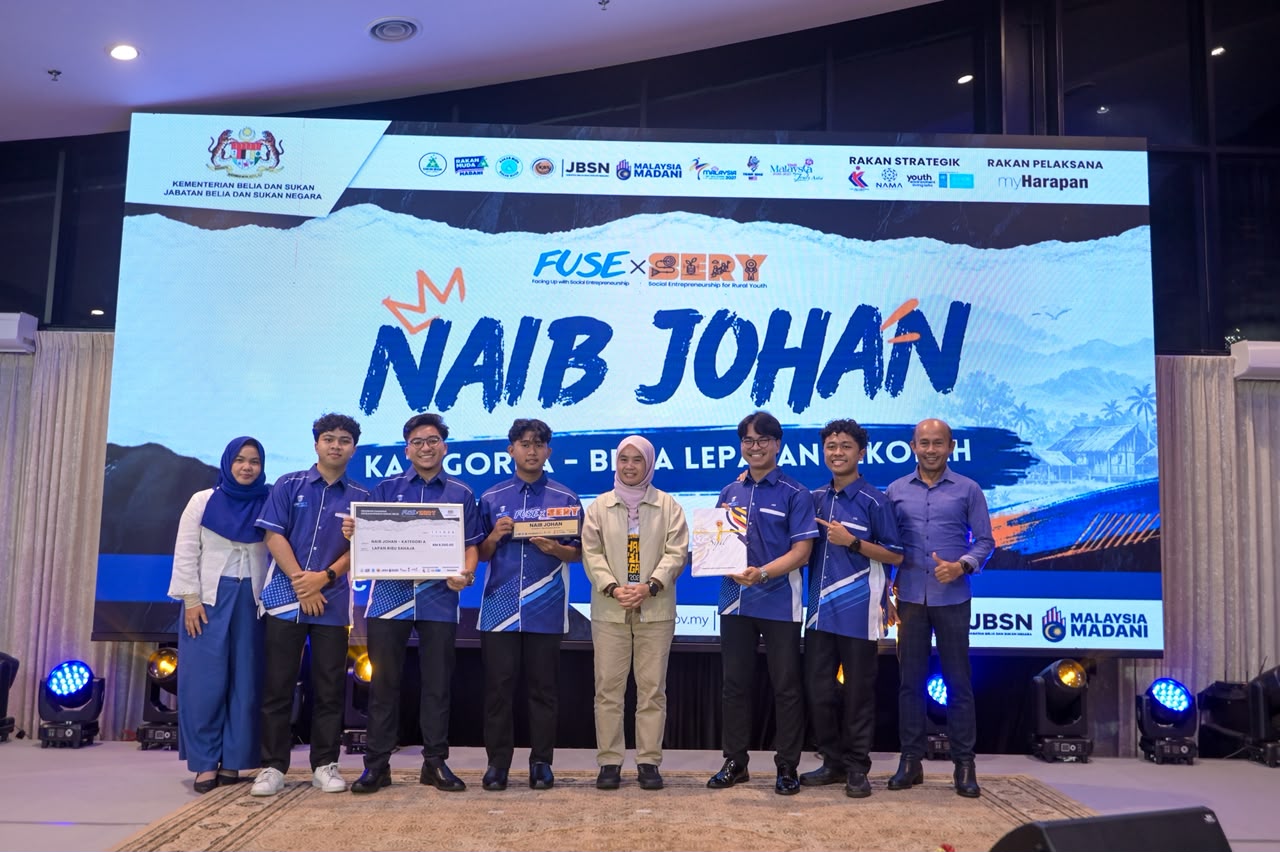
Their innovation earned First Runner-Up in Category A at Cabaran Keusahawanan Sosial Belia – FUSE × SERY 2026, securing an RM8,000 cash prize following the final pitch and closing ceremony on 12 October 2026.
Organised by the Ministry of Youth and Sports (KBS) in partnership with myHarapan, the social entrepreneurship challenge provided a platform for young innovators to develop practical solutions addressing societal needs through entrepreneurship and innovation.
UniPact was inspired by a challenge the team recognised within their own university community: students often possess technical knowledge and skills but have limited opportunities to demonstrate their capabilities through real industry experience.
The team envisioned a digital platform that would create a more direct connection between students seeking practical experience and organisations looking for emerging talent.
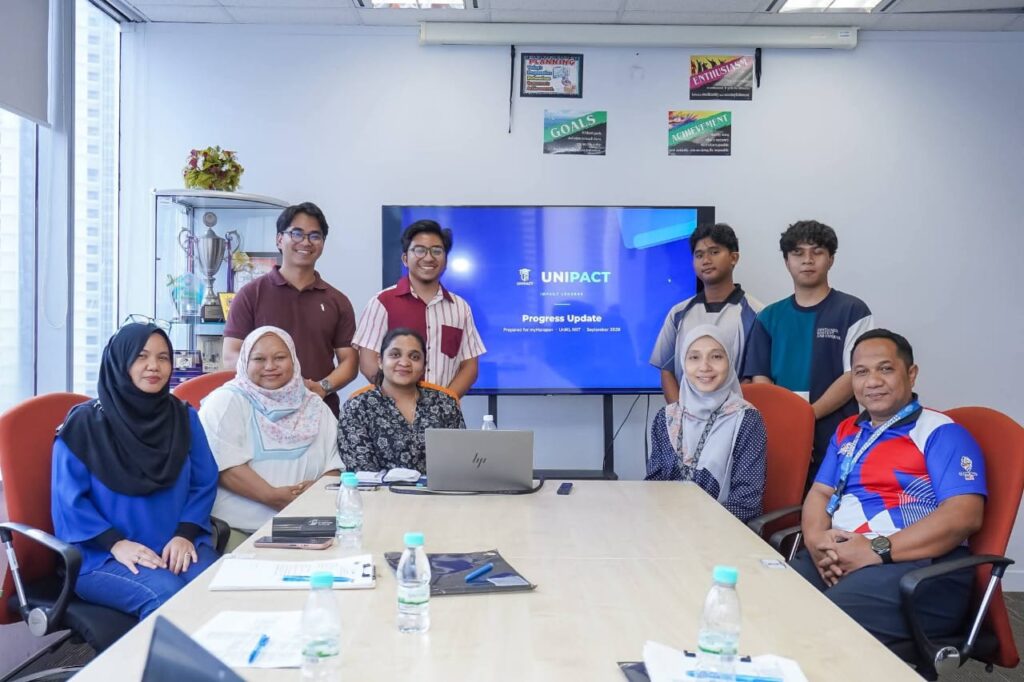
Through UniPact, students can potentially access industry-based projects, obtain verification of completed work and develop digital portfolios that provide evidence of their technical competencies and project experience.
For businesses and organisations, the proposed platform offers a way to identify students with relevant skills while exploring opportunities to engage emerging talent through project-based collaboration.
The innovation reflects a broader shift towards skills-based employability, where practical experience, demonstrated competencies and industry engagement complement formal academic qualifications.
Rather than focusing solely on academic achievements, UniPact seeks to help students demonstrate what they can do with the knowledge they have acquired.
Behind the competition recognition was a three-month validation process that challenged the team to test its assumptions and better understand the needs of students and industry stakeholders.
During the first month, the students recruited participants and conducted interviews to identify the barriers students face in accessing industry projects and gaining practical work experience.
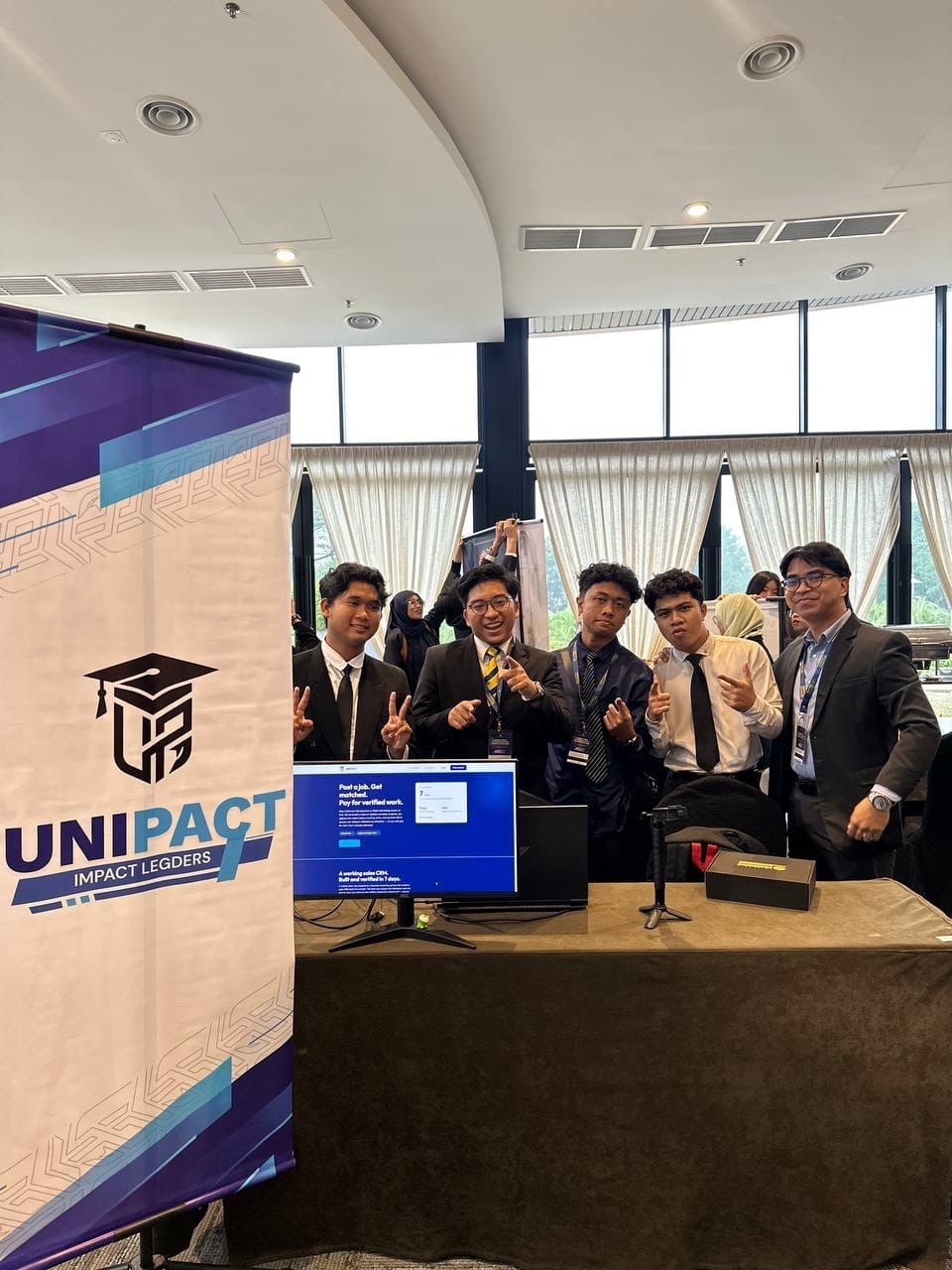
The second month focused on understanding industry expectations. The team participated in startup festivals, engaged with businesses and conducted workshops for software students to gather insights into the skills and experiences valued by potential employers and clients.
In the third month, the team moved beyond discussions by matching students with real clients to test the UniPact model and collect feedback.
This process enabled the team to refine its proposed solution based on practical engagement rather than relying solely on assumptions about students’ employability needs.
The experience reinforced an important lesson in social entrepreneurship: developing an innovative idea is only the beginning, while understanding the people it aims to serve is essential to creating meaningful impact.
The UniPact team brought together students from different technology disciplines, reflecting the multidisciplinary nature of digital innovation.
The team comprised Azizi Sahari, a Semester 6 Bachelor of Software Engineering student, and Muhammad Akif Najmi Shamsul Bahari, a Semester 7 Bachelor of Information Technology in Computer System Security student.
They were joined by Mohamed Naqiib Mohamed, a Semester 5 Bachelor of Computer Engineering Technology (Networking Systems) student; Adam Haikal Mohd Faizal, a Semester 7 Bachelor of Software Engineering student; and Muhammad Luqman Hasan, a Semester 4 Bachelor of Multimedia Technology in Interactive Multimedia Design student.
The students received guidance from Nadhirah Azamuddin, Lecturer at Teknoputra, UniKL MIIT, throughout their social innovation journey.
Their participation in FUSE × SERY 2026 involved several stages, including selection, intensive training, mentorship, project development and the final presentation.
Beyond the RM8,000 prize, the achievement demonstrated how students from different academic backgrounds can combine their expertise to develop technology-driven solutions with potential social and economic benefits.
The innovation aligns with the United Nations Sustainable Development Goals (SDGs), particularly SDG 4: Quality Education, through skills development and opportunities for practical learning, and SDG 8: Decent Work and Economic Growth, through its focus on youth employability and entrepreneurship.
Its use of digital technology to address a societal challenge further relates to SDG 9: Industry, Innovation and Infrastructure, while the programme’s engagement with industry stakeholders reflects the importance of collaboration in developing practical solutions.