
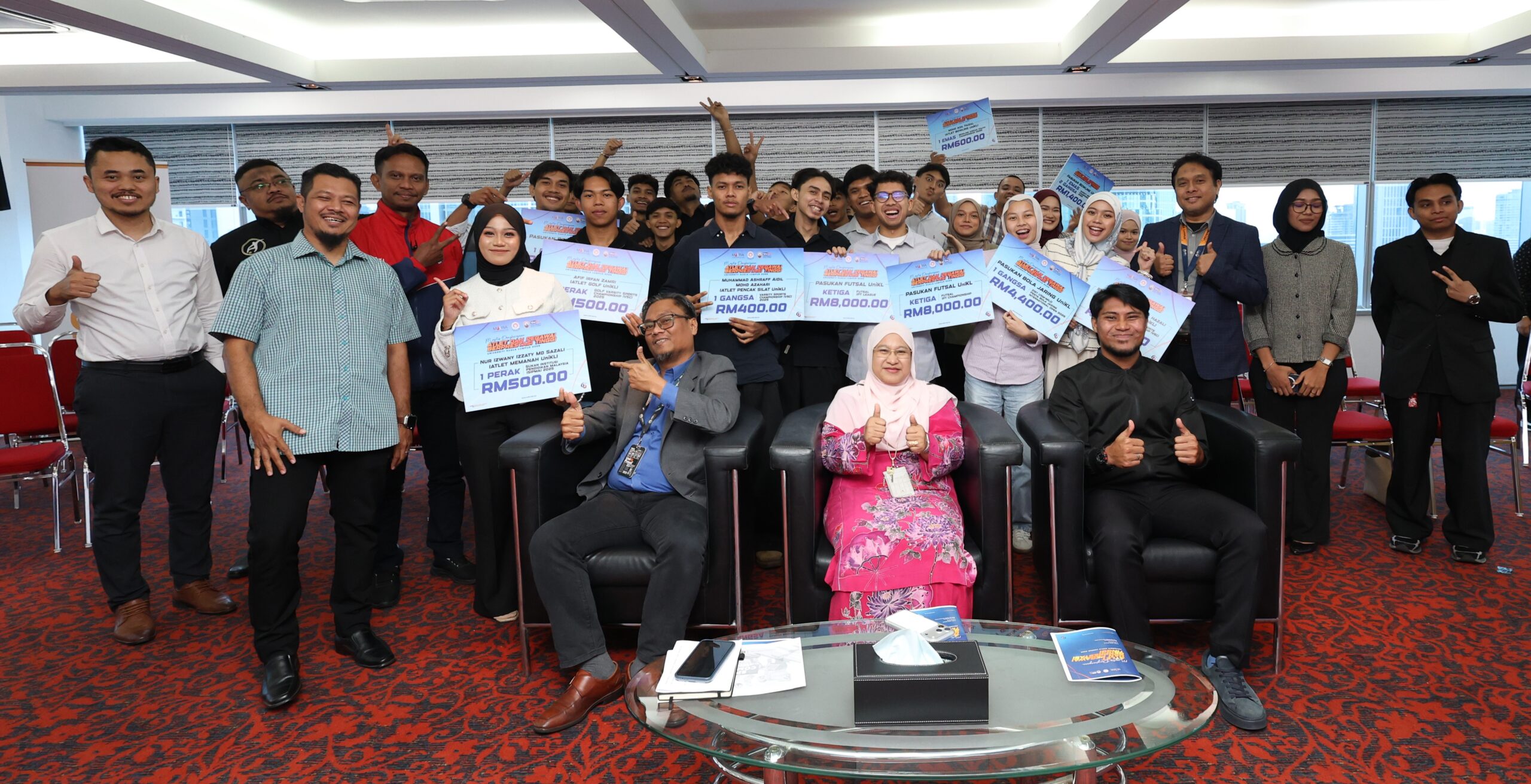
Five athletes and four sporting teams were awarded cash incentives by Universiti Kuala Lumpur (UniKL) in recognition of their outstanding achievements in various sports.
Most of them contributed to podium finishes at national and international sporting competitions in 2025.
The highest cash incentive of RM600 was awarded to Mohd Aqil Faizal for his gold medal contribution at the ASEAN Youth Bowling Championship 2025.
Meanwhile, two athletes who secured silver medals — Afif Irfan Zamri and Nur Izwany Izzaty Md Sazali — in the Golf Varsity Sports Championship and archery at the Sukan Institusi Pendidikan Malaysia (SIPMA), respectively, received RM500.
A similar recognition was also presented to the UniKL football team, which won a silver medal at SIPMA.
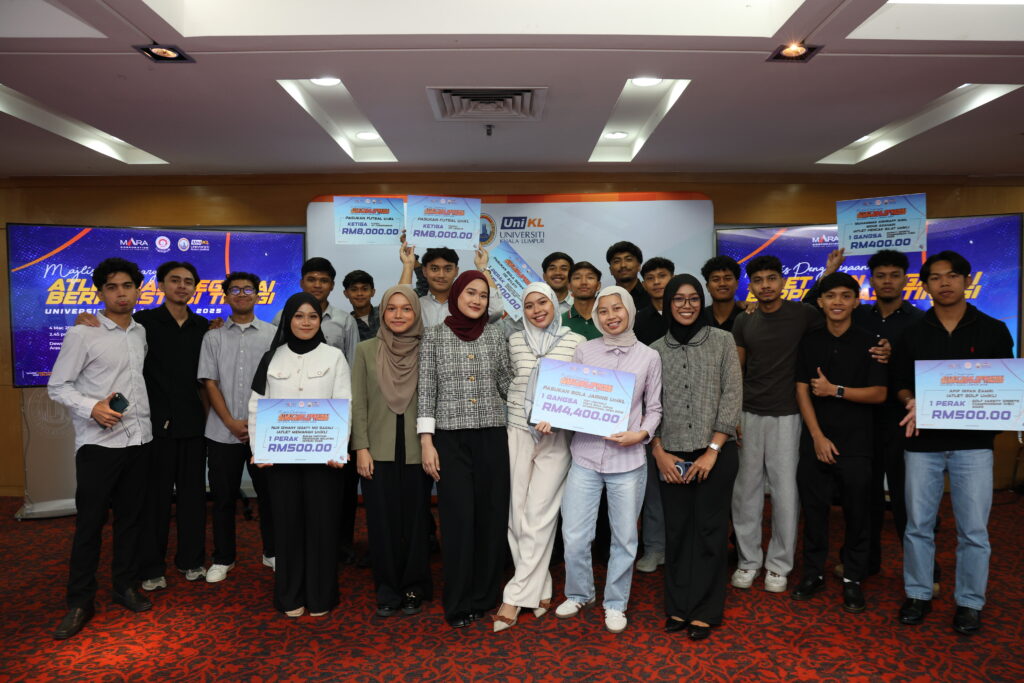
In addition, five teams were recognised for their bronze medal achievements in the Bowling Varsity Sports Championship, SIPMA, Liga Futsal IPT, Piala Futsal IPT, and the 31st USM–MILO Pesta Bola Jaring International Open 2025.
The athletes were celebrated during a ceremony held on 4 March 2026. The event was graced by the Deputy President (Student Development and Campus Lifestyle), YBhg. Prof. Ts. Dr. Zalizah Awang Long.
“This year, the victory incentive has been increased compared to last year. Gold medal winners will receive an incentive of RM600, while silver medal winners will receive RM500 and bronze medal winners RM400.
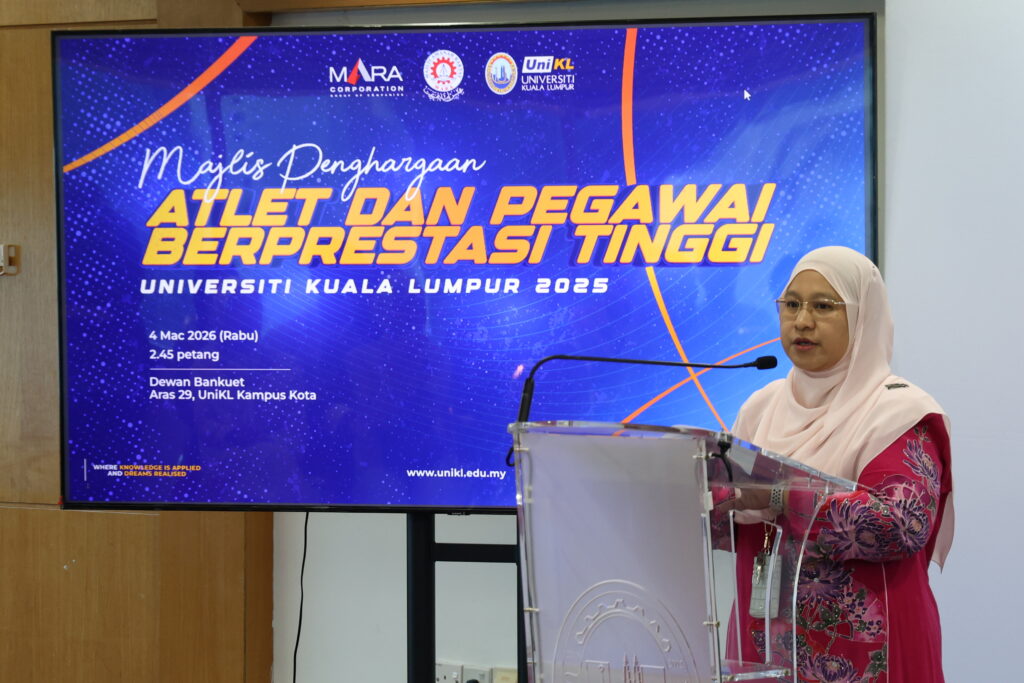
“It is hoped that this increase will further boost the motivation of UniKL athletes to perform harder and strive for success in every competition they participate in.
“I would also like to extend my heartfelt congratulations to the athletes who have achieved success. I hope that the incentives provided will further encourage our athletes and help produce more competitive athletes who are capable of bringing honour to the nation and to UniKL in particular,” she said in her officiating speech.
Note: In line with Malaysia’s aspiration to achieve the Sustainable Development Goals (SDGs), Universiti Kuala Lumpur (UniKL) continues to strengthen and expand its efforts through various initiatives. This article particularly supports SDG 3 (Good Health and Well-being) and SDG 4 (Quality Education).