

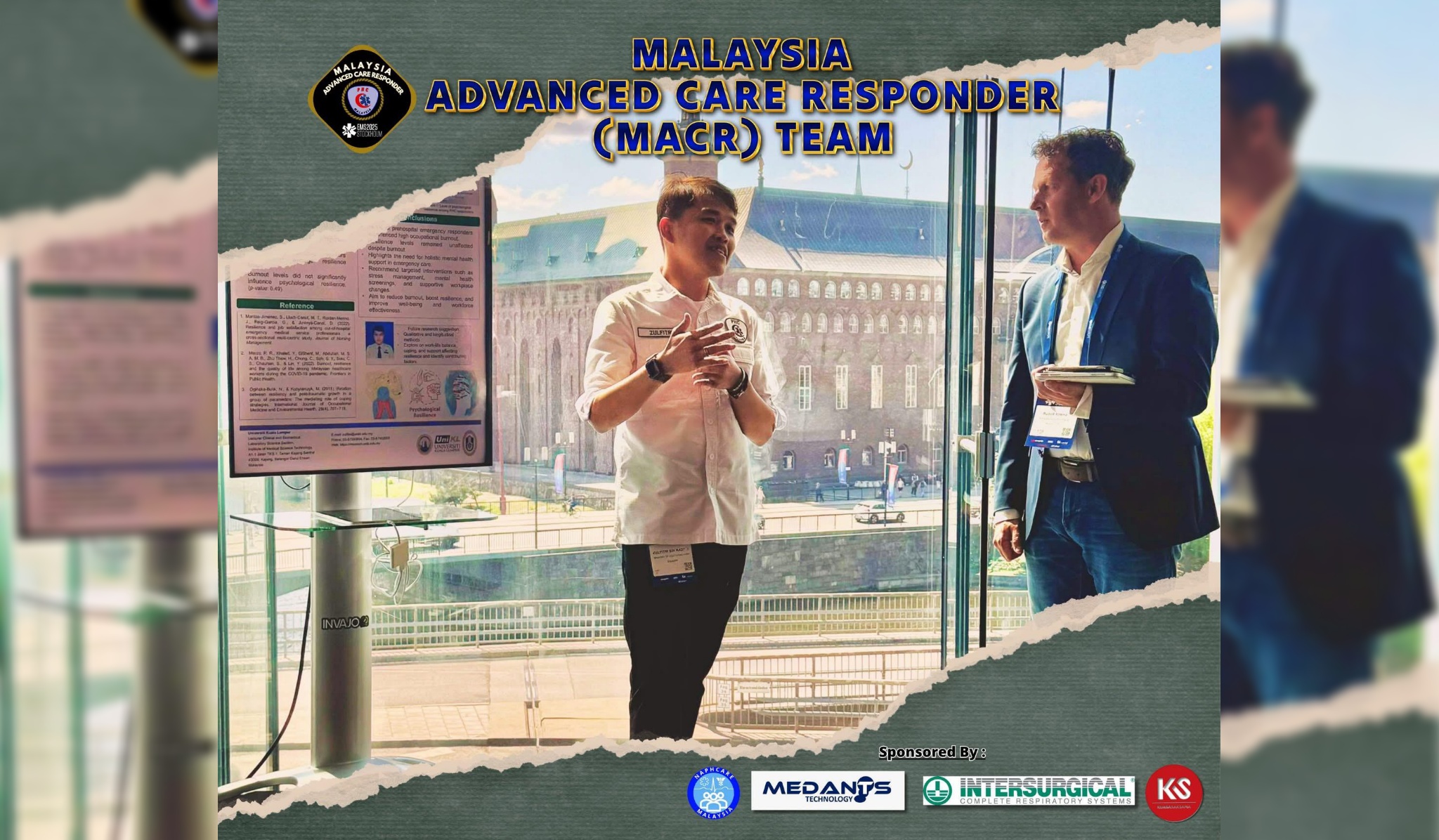
Flying the Malaysian flag high, Zulfitri Razali, a lecturer from Universiti Kuala Lumpur Malaysian Institute of Medical Science Technology (UniKL MESTECH), represented the country at the renowned European Emergency Medical Services (EMS) Congress 2025.
Held at Stockholm Waterfront Congress Centre, from 2 to 4 June, the event gathered over 3,000 emergency care professionals from across the globe under the theme “It Takes a System to Save a Life.”
Zulfitri participated as a member of the Malaysia Advanced Care Responder (MACR) team, which competed in the highly anticipated EMS Championship, a simulated clinical competition designed to test team coordination, clinical decision-making, and emergency response under pressure.
Alongside him were team members from various Malaysian hospitals: Muhamad Syahir Ibrahim Shaari and Khairul Nasrullah Mohamad (Hospital Sungai Buloh), Muhamad Zal Maula Mustafar (Hospital Segamat), Md Safwan Latif Ahmad (Hospital Rembau), and Muhamad Arif Ahmad Rashidi (Hospital Tengku Permaisuri Norashikin).
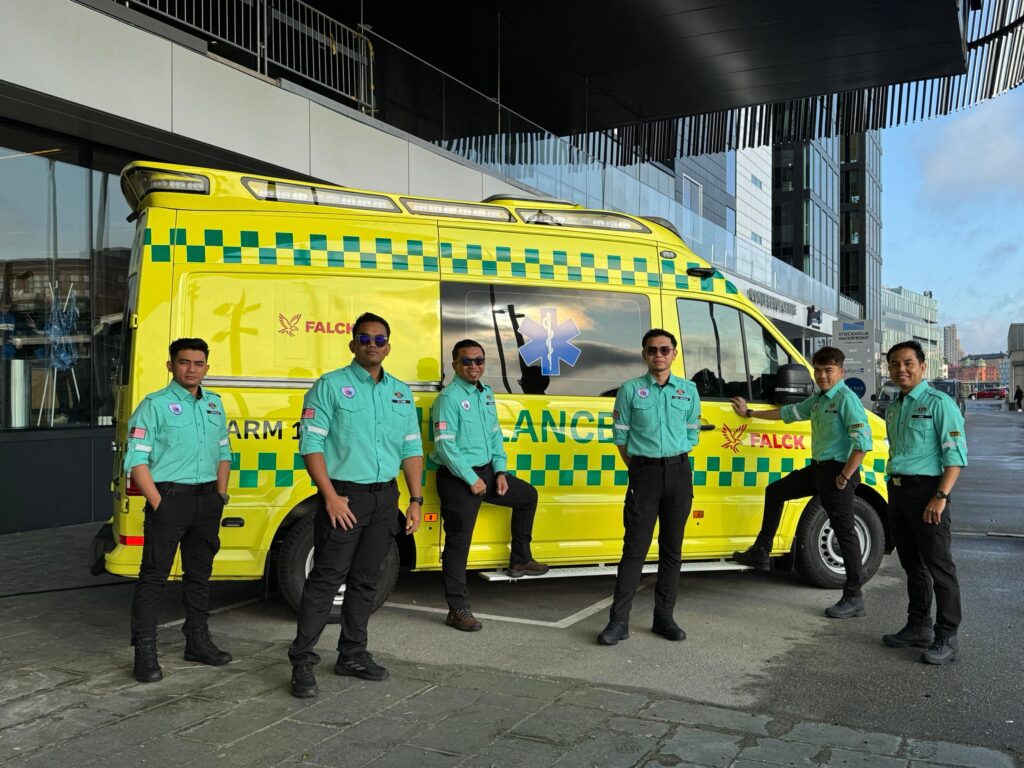
At the congress, they tackled high-stakes trauma and medical scenarios that pushed the boundaries of speed, precision, and innovation.
Organised by EMS Europe in collaboration with the Swedish Resuscitation Council, the three-day congress focused on systems-based approaches to emergency care.
Topics discussed ranged from AI-powered triage, stroke protocol optimisation, to the impacts of climate change on EMS readiness.
Keynotes and workshops highlighted the importance of ethical decision-making, mental resilience, and the integration of coordinated systems to achieve better patient outcomes.
Beyond the competition, Zulfitri also contributed academically by presenting a poster titled “Coping Under Pressure: Burnout and Psychological Resilience in Malaysian Pre-Hospital Care Responders.”
The presentation sparked in-depth discussions about mental health in the EMS field, drawing attention to the growing concern over burnout and emotional fatigue experienced by frontline healthcare providers worldwide.
“For educators like myself, the congress reaffirmed the importance of transforming AMO training. We must move beyond passive instruction and embrace scenario-based learning that mirrors the unpredictability of real-life emergencies,” said Zulfitri.