


Malaysia’s ambition to attract 250,000 international students by 2030 presents new opportunities for higher education institutions to strengthen their global presence, expand international partnerships and enhance their competitiveness in the international education landscape.
The national target, announced by Higher Education Minister Senator Dato’ Seri Diraja Dr. Zambry Abdul Kadir on 13 October 2026, reflects Malaysia’s growing commitment to positioning itself as a preferred destination for quality higher education.
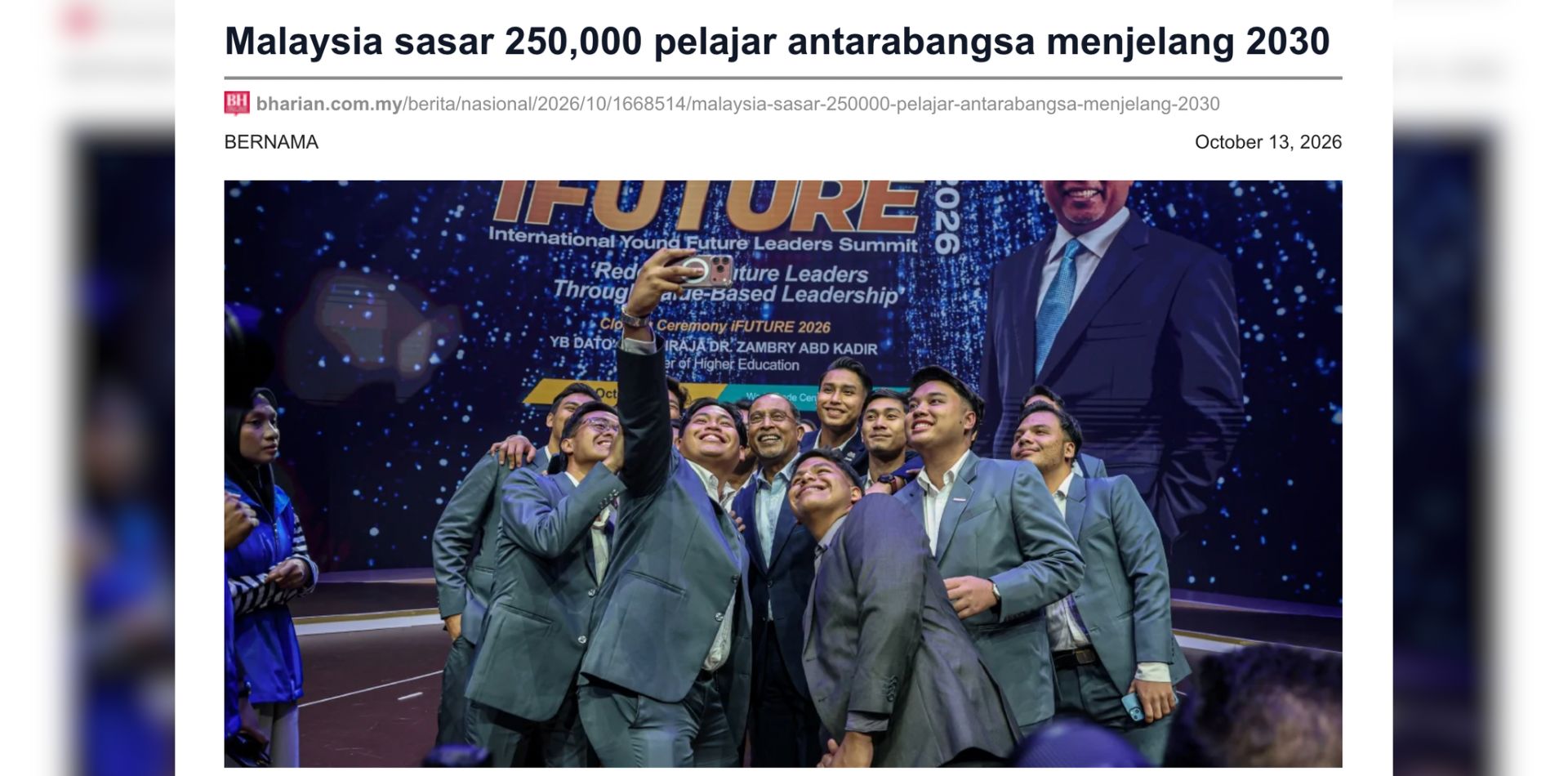
Speaking after the closing ceremony of the International Young Future Leaders (iFUTURE) Summit 2026 at the World Trade Centre Kuala Lumpur, he said Malaysia currently hosts approximately 170,000 international students from 180 countries.
The government aims to further diversify the countries of origin of international students, fostering a more internationally connected and culturally diverse higher education environment.
Senator Dato’ Seri Diraja Dr. Zambry said international students are projected to contribute at least RM16 billion annually to the national economy, excluding additional economic benefits generated through related business and commercial activities.
The projection highlights the wider economic importance of international higher education, particularly in supporting local businesses, stimulating education-related services and strengthening Malaysia’s international profile.
For Universiti Kuala Lumpur (UniKL), Malaysia’s international student recruitment target aligns with the university’s ongoing efforts to expand its international reach and strengthen its position in the global higher education landscape.
As a leading entrepreneurial technical university specialising in industry-oriented Higher Technical and Vocational Education and Training (HTVET), UniKL continues to leverage its strengths in technical education, applied research and industry partnerships to attract international students and collaborators.
This direction is reinforced through the university’s emerging UniKL Beyond 2030 strategic roadmap, which places greater emphasis on academic excellence, international collaboration, research impact and global recognition.