


He used to stare at words that seemed to move across the page. Sentences appeared jumbled. Reading felt like chasing letters that refused to stay still.
Imagine enduring that for 29 years without knowing why. It was only during his master’s degree that Dr. Ahmad Syahid Ahmad Fawzal discovered the reason. He was mildly dyslexic.
“The reason I went for the dyslexia test was actually very practical,” he shared.
“During exams, the invigilator told me that if I could prove I was dyslexic, I might be eligible for extra time. So I went to a clinic and underwent four screenings. The General Practitioner (GP) confirmed that I was mildly dyslexic.”
For years, he had misunderstood the struggle. “Most of the time, I knew the answers. The problem was not understanding. The problem was not having enough time to write down what was already in my head.”
Over time, especially after completing his master’s degree, his understanding of dyslexia deepened and became more personal. The turning point came when he began noticing similar symptoms in his second child.
The perseverance he cultivated over the years shaped him into someone deeply curious. He constantly questioned, analysed, and searched for better ways to explain complex phenomena.
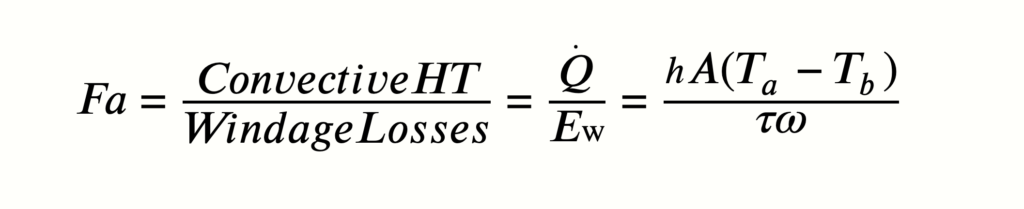
That mindset eventually led him to develop a global performance metric known as the Fawzal Number (Fa), a dimensionless number that balances useful heat transfer against the cost of driving a cooling system.
The idea became concrete during his PhD research. He presented his work at a high-prestige IEEE conference, where the paper was well received. The organisers later invited him to extend it into a journal publication.
However, it was during the journal review process that a reviewer posed a sharp and transformative question.
“He said I had presented so much data,” Dr. Ahmad Syahid recalled. The underlying challenge was clear: With all that data, how could one quantify what was best and what was worst?
“That question stayed in my mind. I realised that I was generating extensive fluid dynamics data, but I had not yet created a simple metric to compare performance clearly.”
As engineers are trained to optimise, optimisation requires a clear measure. He felt that existing performance metrics did not fully capture the trade-off between cooling effectiveness and energy consumption. From that challenge emerged a dimensionless number that engineers could use to evaluate and balance performance.
Born into a family of six siblings and raised by parents who deeply believed in education, Dr. Ahmad Syahid grew up admiring Osborne Reynolds, who introduced the Reynolds number, a dimensionless number that transformed how engineers understand fluid flow.
He often read about how one mathematical formulation could shape an entire field of engineering. That admiration planted a seed.
“I wanted to contribute something similar,” he said. “Not for fame, but to give something useful to engineering that others could apply.”
Looking back, school had never been easy. Dr. Ahmad Syahid, an alumnus of the Diploma in Engineering Technology (Machine Building and Maintenance) at Universiti Kuala Lumpur Malaysia France Institute (UniKL MFI), graduating in 2007, admitted that academic life was challenging.
He did not consistently perform well. Subjects involving logic and hands-on application were manageable. But reading-intensive and theory-heavy subjects were difficult.
“There were moments when I failed and had to repeat. It was not a smooth journey,” he recalled.
Before entering UniKL, he had even failed his first diploma at another higher learning institution.
“I was not thriving in a purely theoretical setting.” For him, UniKL became a turning point. The practical, hands-on engineering approach matched the way he learned, which is through doing, building, and applying.
“It gave me a second chance,” he said.
Today, he works in computational fluid dynamics and multiphysics simulation, involving the coupling of fluid flow with particle dynamics simulations. His curiosity has not stopped.
“I have developed, but not yet published, a statistical method similar in spirit to a normal distribution, but extended into spatial dimensions.
“The motivation is to help engineers quantify how well something is distributed across a physical space,” he further noted.
Note: In line with Malaysia’s aspiration to achieve the Sustainable Development Goals (SDGs), Universiti Kuala Lumpur (UniKL) continues to strengthen and expand its efforts through various initiatives. This article particularly supports SDG 4 (Quality Education), SDG 9 (Industry, Innovation and Infrastructure), and SDG 10 (Reduced Inequalities).